
How to Plan a Solar Panel Installation Project?
Solar power has moved from a specialist option to a mainstream energy investment. The IEA PVPS Trends 2024 report estimates that global photovoltaic capacity exceeded 1.6 terawatts by the end of 2023. IRENA’s Renewable Capacity Statistics 2024 also records solar as the largest source of new renewable capacity added worldwide. These figures show strong momentum, but they do not guarantee a good result for every building.
A successful solar panel installation begins with evidence, not enthusiasm. Your electricity bills, roof age, orientation, shading, structural condition, and local weather patterns all affect the design. A clear load profile can prevent oversizing. A simple afternoon shade check can reveal losses that software may underestimate. Small details matter.
This guide explains how to plan the project from the first site assessment to system commissioning. It covers energy goals, panel and inverter selection, battery decisions, electrical design, budgeting, scheduling, and quality control. Guidance from the U.S. Department of Energy and the National Renewable Energy Laboratory supports the emphasis on performance modeling, qualified workmanship, and long-term maintenance. Local codes, utility requirements, and certified professionals must remain part of the process.
A perfect plan is unlikely. Roof conditions change. Equipment availability shifts. Estimates can also be optimistic. Careful planning still reduces avoidable surprises, protects the investment, and creates a safer installation. The most reliable project is not always the largest one. It is the system that fits the building, the household’s actual demand, and realistic future needs.
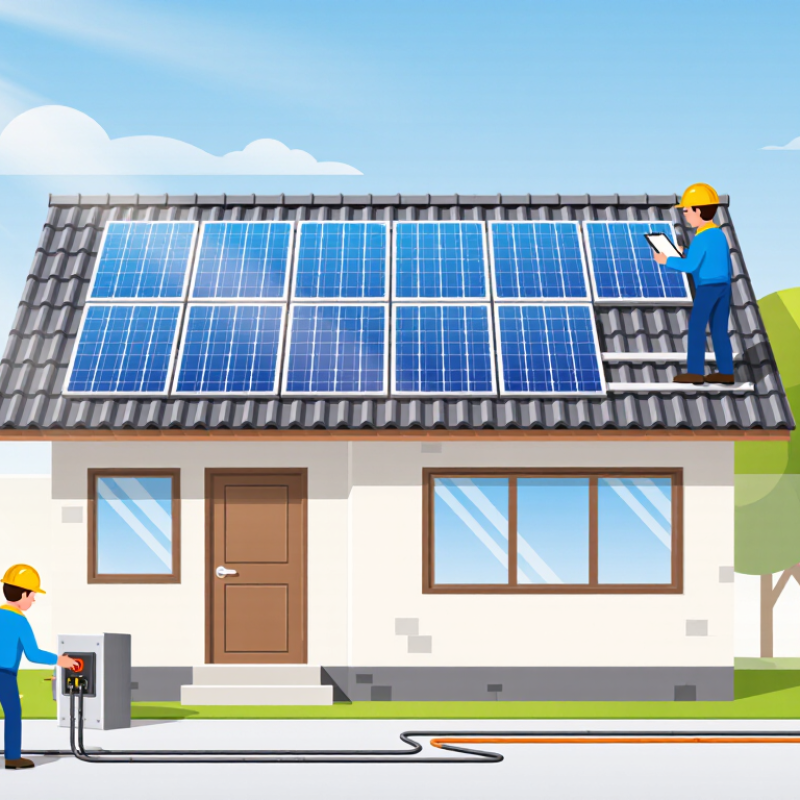
Table of Contents
[Hide]
Define Project Goals, Energy Needs, and Site Constraints
A solar installation starts with a measurable purpose, not panel quantity. Define whether the system will reduce bills, support backup power, or meet a carbon target. Then examine twelve months of electricity bills, including seasonal peaks and demand charges. The U.S. Energy Information Administration reported average residential electricity use of about 10,800 kilowatt-hours in 2022. Your property may differ sharply. Electric vehicles, heat pumps, and future construction can change the load. Build a simple hourly estimate, and label every assumption.
Use professional modeling tools to test solar yield under local weather conditions. NREL’s PVWatts guidance shows that orientation, tilt, losses, and shading can materially change annual production. Do not treat a perfect roof sketch as field evidence. Walk the site at different times, photograph shadows, and inspect roof age, structural condition, cable routes, and safe working access. A small chimney shadow may affect several modules.
Site limits often decide the design. Check usable roof area, drainage paths, fire-access requirements, local interconnection rules, and battery ventilation needs. IRENA’s Renewable Capacity Statistics 2024 recorded 345.5 gigawatts of new solar capacity worldwide in 2023, showing strong deployment momentum, but growth does not remove local constraints. A roof can look spacious and still fail the load assessment. That part is easy to underestimate. Leave space for maintenance and future equipment, even when the first drawing feels efficient.
How to Plan a Solar Panel Installation Project? - Define Project Goals, Energy Needs, and Site Constraints
| Planning Category | Data Dimension | Example Project Data | Calculation or Reference | Planning Decision |
|---|---|---|---|---|
| Project Goals | Primary objective | Reduce annual grid electricity consumption while maintaining normal household operations. | A grid-connected solar system can offset part or all of a building’s annual electricity use, depending on system size and solar resource. | Prioritize annual energy offset rather than designing only for peak daytime loads. |
| Energy Needs | Annual electricity consumption | 9,600 kWh per year | Based on an average monthly electricity use of 800 kWh × 12 months. | Use 9,600 kWh as the baseline for system-sizing scenarios. |
| Energy Needs | Target solar energy offset | 80% of annual consumption, or approximately 7,680 kWh per year | 9,600 kWh × 80% = 7,680 kWh. | Size the system to produce about 7,680 kWh annually, subject to site-specific solar conditions. |
| System Sizing | Estimated photovoltaic capacity | Approximately 5.5 kW DC | Illustrative estimate using a site yield of approximately 1,400 kWh per installed kW per year: 7,680 ÷ 1,400 ≈ 5.5 kW. | Request a detailed production estimate using local solar irradiance, roof orientation, shading, and equipment losses. |
| Site Constraints | Available installation area | Approximately 32 m² of unobstructed roof area | Typical modern modules produce roughly 180–230 W per m², before allowance for spacing and access paths. | Confirm that the usable area can accommodate approximately 5.5 kW DC plus required setbacks and maintenance access. |
| Site Constraints | Roof orientation and tilt | South-facing roof plane with an estimated 25° tilt in the Northern Hemisphere | A south-facing orientation and tilt near the local latitude are commonly favorable in the Northern Hemisphere, although exact performance varies by location. | Use the available roof plane if shading and structural conditions are acceptable; do not assume optimal orientation without a site survey. |
| Site Constraints | Shading exposure | Minor morning shading from a nearby tree; no significant midday obstruction observed | Shading can reduce energy production and may affect individual module or string performance. | Complete a shade assessment at different times of day and seasons before finalizing the layout. |
| Structural Review | Roof condition and load capacity | Roof is approximately 8 years old; structural capacity requires professional verification | Solar mounting systems add dead load and may experience wind and snow forces depending on the location. | Obtain a structural assessment and repair or replace unsuitable roofing before installation. |
| Electrical Requirements | Existing service capacity | Single-phase electrical service with a 200 A main panel | The interconnection method depends on inverter output, panel capacity, local electrical rules, and utility requirements. | Have a qualified electrician verify panel capacity, breaker space, grounding, disconnects, and utility interconnection requirements. |
| Future Planning | Potential future loads | Electric vehicle charging and a heat-pump water heater may be added within five years. | Future electrification can materially increase annual electricity demand and peak electrical load. | Review roof space, inverter capacity, electrical service, and budget before locking the final system size. |
| Permits and Compliance | Approvals required | Building permit, electrical approval, inspection, and utility interconnection review | Permit and interconnection requirements vary by jurisdiction and system type. | Confirm local requirements before procurement and include approval time in the project schedule. |
Planning Note:
The figures shown are realistic example values for preliminary planning. Final system capacity and energy production should be confirmed through a site survey, structural review, electrical assessment, local solar-resource analysis, and utility approval.
Related Posts
-
What Is the Best Type of Solar Panels in Florida?
-
10 Tips for Choosing the Best Solar Panels for Your Home?
-
2026 Top Solar Panel Quote Guide for Global Buyers
-
China Top Solar Panels in Texas for Global Buyers?
-
10 DIY Solar Panels Tips for Global Buyers?
-
2026 Best Solar Panels in PA for Global Buyers?