What Is the Best Type of Solar Panels in Florida?
Florida’s bright skies make solar attractive, but heat, humidity, and hurricane exposure complicate the choice. The best type of solar panels florida homeowners can buy depends on roof space, shade, budget, and installation quality—not efficiency claims alone. There is no perfect panel.
The IEA Photovoltaic Power Systems Programme’s Snapshot of Global PV Markets 2024 reports that crystalline-silicon modules accounted for more than 97% of global production in 2023. That makes monocrystalline panels a practical starting point: they are widely available and deliver strong output from limited roof space. NREL researcher Andy Walker’s guidance, paraphrased, is that module temperature affects power output. Florida’s midday roof can feel like a skillet. Heat-tolerant panels may lose less output as temperatures rise, but check the manufacturer’s temperature coefficient and warranty rather than relying on a “Florida-ready” label. I would not treat a laboratory efficiency rating as a local performance guarantee.
NREL’s PVWatts calculator also shows why location, shading, tilt, and system design matter to estimated production. A strong module cannot fix a shaded roof or poor installation. Ask installers to explain wind-load design, mounting hardware, and how they will protect wiring from moisture. No panel is stormproof. Compare complete system proposals, including warranties and expected annual production, before choosing between premium monocrystalline models and lower-cost options. The small details matter. A panel that looks ideal on paper may be a poor fit for your roof.
Florida’s Climate and Solar Energy Potential
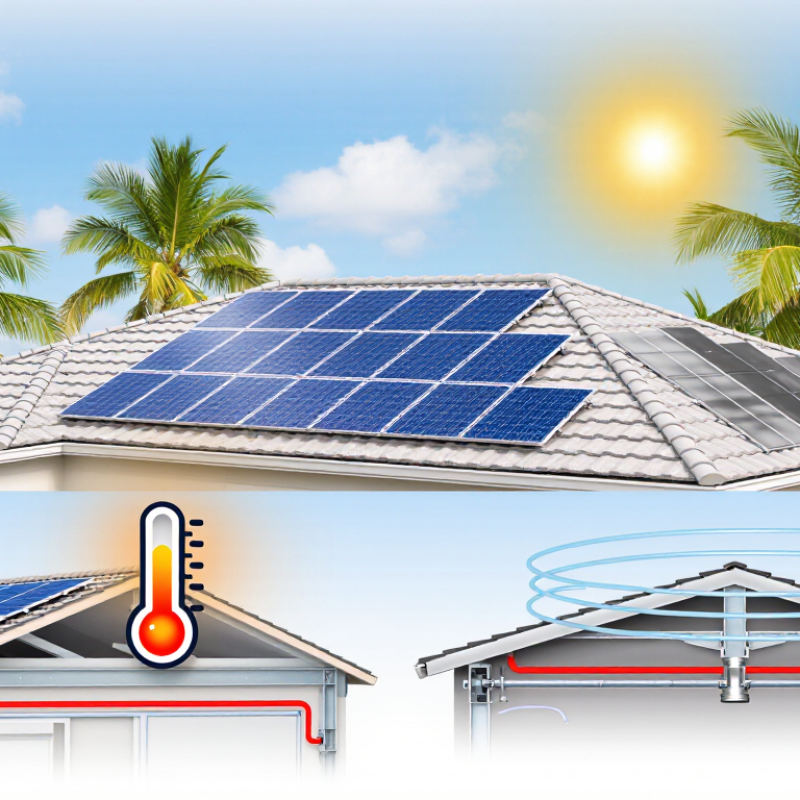
Florida’s climate gives solar energy a strong foundation. The National Renewable Energy Laboratory’s PVWatts data shows much of the state receives about 4.5 to 5.5 peak sun hours daily. That resource can support excellent annual production. However, Florida’s heat, humidity, salt air, and intense storms affect panel selection. More sunlight does not always mean better output.
For many homes, high-efficiency monocrystalline panels are a practical choice because they produce more electricity from limited roof space. Their temperature coefficient also matters. Panels lose efficiency as temperatures rise, often near 0.3% to 0.4% for each degree Celsius above standard testing conditions. The International Energy Agency notes that module performance depends heavily on operating temperature and system design. In Florida, proper airflow beneath the panels can reduce heat buildup. Small details matter.
Bifacial panels may perform well on bright, reflective surfaces, but their benefits can be overstated on dark shingles. The National Renewable Energy Laboratory reports that bifacial gains depend on ground reflectivity, spacing, and mounting height. Coastal properties also need corrosion-resistant hardware and careful sealing. NOAA climate records show Florida regularly faces heavy rainfall, tropical storms, and hurricane-force winds. That makes racking and installation quality as important as the panel type. It is tempting to choose the highest efficiency rating. That may be the wrong priority. A slightly less efficient panel, installed securely with a strong warranty and suitable ventilation, can deliver more dependable energy over decades.
The Main Types of Solar Panels
What Is the Best Type of Solar Panels in Florida?
The Main Types of Solar Panels
Monocrystalline panels are often the strongest choice for Florida homes. They use roof space efficiently and produce more power per square foot. This matters when a house has a small or irregular roof. Their dark surfaces can reach high temperatures under direct sun. Quality installation and proper airflow beneath the panels can help manage heat. They also suit homeowners who want a cleaner, less crowded roof.
Polycrystalline panels usually cost less, but they need more space for similar output. Their blue appearance is noticeable against light shingles. Thin-film panels are lighter and can perform steadily in hot conditions. However, they generally require a larger installation area. They may work well on broad roofs, garages, or low-load structures. That advantage is easy to overlook.
Florida adds practical concerns beyond panel type. Coastal homes face salty air, while inland properties may experience heavy rain and strong winds. A qualified installer should check roof age, drainage, mounting hardware, and local wind requirements. I would not select panels by efficiency alone. A highly efficient panel performs poorly if nearby trees create afternoon shade. A cheaper system can also become frustrating when repairs are difficult. Ask for production estimates based on your roof’s direction, shade, and summer heat. Real conditions may differ from computer models. That uncertainty deserves honest attention.
Key Factors for Choosing Solar Panels in Florida
What Is the Best Type of Solar Panels in Florida?
Choosing solar panels in Florida requires more than comparing efficiency percentages. Monocrystalline silicon panels often suit Florida homes because they produce strong output within limited roof space. The National Renewable Energy Laboratory’s PVWatts documentation uses about 0.37% power loss per degree Celsius for crystalline silicon modules. Hot roofs can therefore reduce summer production. Panels with better temperature coefficients may perform more consistently.
Weather resistance matters just as much as efficiency. Florida roofs face intense sunlight, humidity, salt air, and hurricane-force winds. The Florida Building Code requires solar installations to meet structural and wind-load standards. Buyers should request documented testing under IEC 61215 and IEC 61730 safety standards. NREL’s 2024 Annual Technology Baseline reports typical commercial crystalline silicon module efficiencies near 20% to 23%. Higher efficiency helps, but it can raise the purchase price. Bigger numbers are not automatically better.
Shading and roof direction also shape the decision. The U.S. Department of Energy recommends site-specific modeling because annual production depends on orientation, tilt, and obstructions. Bifacial panels may add value over bright, reflective surfaces, but ordinary shingle roofs offer limited rear-side gain. Coastal homeowners should examine corrosion protection and installer experience. I would not promise identical results for every Florida house. Even accurate models can miss tree growth, dirt, or storm downtime. A careful proposal should show monthly production, degradation assumptions, equipment warranties, and maintenance access.
What Is the Best Type of Solar Panels in Florida? - Key Factors for Choosing Solar Panels in Florida
| Panel type |
Typical module efficiency |
Typical temperature coefficient |
Potential advantages in Florida |
Points to consider |
| Monocrystalline PERC |
About 19–22% |
Often around −0.34% to −0.40% per °C |
Widely used; solid efficiency can suit homes with limited roof space. |
Hot weather reduces output for all silicon modules; compare the specific module’s temperature rating. |
| Monocrystalline TOPCon |
About 21–23% |
Often around −0.29% to −0.35% per °C |
Higher efficiency and, in many models, a lower temperature-related power loss than conventional PERC modules. |
Compare installed cost, product specifications, and warranty terms rather than relying on cell technology alone. |
| Heterojunction (HJT) |
About 21–24% |
Often around −0.24% to −0.30% per °C |
Some models combine high efficiency with relatively low temperature-related power loss, which can be useful in a hot climate. |
Availability and cost vary; verify the exact module’s certified ratings and project economics. |
| Polycrystalline silicon |
About 15–18% (typical legacy range) |
Often around −0.35% to −0.45% per °C |
Can be considered where an existing system or specific project makes this module type practical. |
Generally needs more roof area for the same rated capacity; new residential options may be limited. |
| Thin-film |
Roughly 10–19%, depending on technology |
Varies considerably by technology and module |
Some products are lightweight or flexible and may suit specialized surfaces or applications. |
Often requires more area for a given system capacity; confirm suitability for the roof and local conditions. |
Efficiency and temperature-coefficient figures are approximate ranges, not guarantees; specifications vary by module. In Florida, also assess roof condition, shading, ventilation, moisture and salt exposure where relevant, and wind-load compliance under applicable local codes. A qualified installer can evaluate the roof and design the system for the property.
Matching Panel Technology to Your Home and Budget
What Is the Best Type of Solar Panels in Florida?
Matching Panel Technology to Your Home and Budget
Florida’s strong sunlight makes high-efficiency monocrystalline panels a practical choice for many homeowners. They produce more electricity from limited roof space. This matters when trees shade part of the roof during the afternoon. A smaller roof does not always require a smaller solar system. Careful design matters more.
Your roof condition should guide the purchase. If shingles may need replacement within a few years, repair the roof first. Removing panels later adds labor and cost. Coastal homes also need mounting hardware designed for severe weather and local building requirements. Ask for wind-load documentation, equipment warranties, and a clear production estimate. Do not rely only on a salesperson’s monthly savings projection.
Budget changes the best answer. High-efficiency panels can cost more, but they may reduce the number of panels needed. Standard panels can work well when roof space is generous and shade is limited. Bifacial panels may help on reflective surfaces, though their benefits can be overstated on dark shingles. Thin-film technology may suit unusual surfaces, but it often needs more space. No option is perfect.
Review twelve months of electric bills before deciding. Compare estimated output with your actual daytime usage. Battery storage can improve evening energy access, but it may not fit every budget. I would rather see a modest, well-measured system than an oversized installation based on optimistic assumptions. Measure twice. Spend once.
What Is the Best Type of Solar Panels in Florida?
Matching panel technology to Florida’s heat, limited roof space, and budget
Monocrystalline panels typically provide the highest efficiency and are a strong choice when roof space is limited.
Thin-film panels generally perform better in high temperatures but require more roof area, while polycrystalline panels
can offer a lower-cost option with moderate efficiency. Values shown are representative ranges for current commercial
technologies; actual performance varies by panel design, installation angle, shading, and local conditions.