What Is the Best Type of Solar Panel for Colorado?
Choosing the best solar panels for a Colorado home means looking beyond the highest efficiency number. At 5,000 feet, bright sun can boost production, while winter snow, hail, and cold snaps test a system’s durability. Roof direction matters, too. A south-facing roof may perform differently from a shaded roof with a steep pitch.
NREL photovoltaic researcher Sarah Kurtz studies how solar modules perform under real-world conditions. A useful takeaway from that work is simple: rated efficiency alone cannot predict a system’s lifetime energy. That distinction matters when comparing solar panels colorado homeowners may consider. Panel warranties, temperature performance, installer experience, and the roof’s usable area all deserve attention. So does the fine print.
There is no single best panel for every Colorado home. High-efficiency panels can help when roof space is limited, while durable, well-supported models may suit other properties better. Ask for production estimates based on your roof, local weather, and shading—not just a national average. Compare the assumptions behind each estimate. Even a detailed proposal can miss something; a nearby tree may grow, or snow may linger longer than expected. A careful choice starts with the home itself.
Solar Conditions That Shape Panel Performance in Colorado
Colorado’s solar conditions vary with elevation, roof shape, and local weather. High-altitude sunlight can be intense, while winter days are short and storms may bring heavy snow or hail. Cold air can help panels operate efficiently, but it does not cancel out cloudy skies or snow cover.
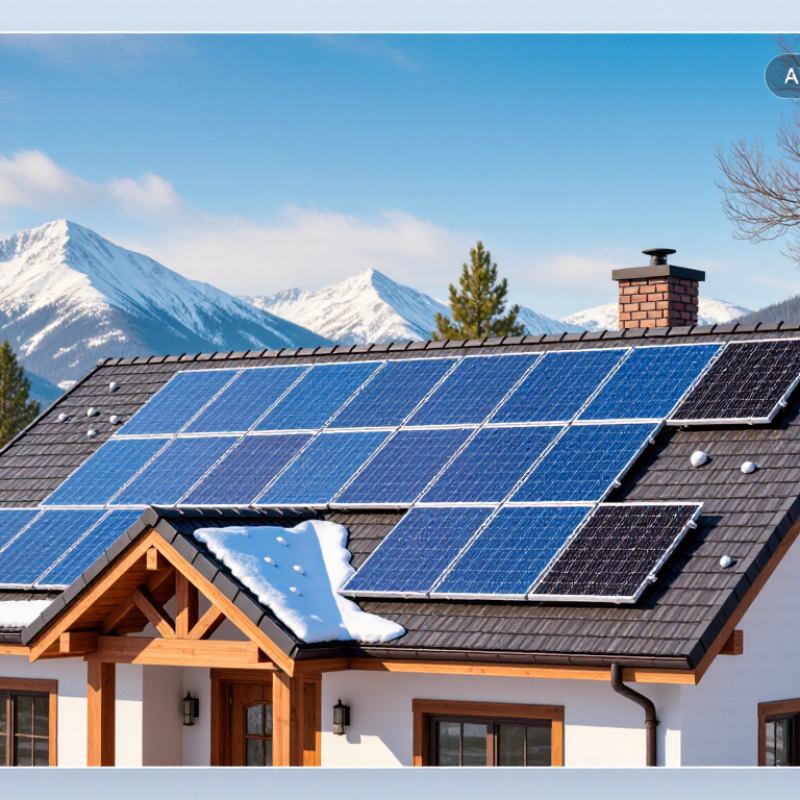
Snow matters in two ways. A clear panel may receive extra reflected light from nearby snow, yet a thick layer can block production until it slides or melts. Steeper roof angles often shed snow faster, though roof design and safe access matter too. Hail exposure also deserves attention: compare panel impact ratings and ask an installer how the mounting system suits local conditions. Details matter.
For many Colorado homes, efficient monocrystalline panels are a practical choice when roof space is limited. Still, panel type alone does not determine output. A shaded chimney, poor orientation, or undersized system can outweigh small efficiency differences. South-facing roofs often perform well, but east- or west-facing arrays may fit a home’s use better. That is an imperfect rule, not a guarantee. I would compare a site-specific production estimate with equipment ratings, roof conditions, and winter shading before choosing. The estimate can still miss unusual weather.
How Panel Technologies Perform in Colorado’s Climate
Colorado’s cold, sunny weather favors panels that convert light efficiently and tolerate temperature swings. On a clear winter morning, low cell temperatures can help a module produce more power than it would on a hot summer roof. But snow can cover the glass, and a steep roof does not guarantee quick clearing. Cold helps. The practical choice is usually high-efficiency monocrystalline silicon, with the exact model judged by its published temperature coefficient and mechanical ratings.
Temperature matters. NREL’s PVWatts Version 5 documentation uses representative power-temperature coefficients of about −0.47% per °C for standard modules, −0.35% for premium modules, and −0.20% for thin-film modules. These are modeling defaults, not guarantees for every product. Thin film may lose less output as temperatures rise, but its lower power density can require more roof area. For a small Denver roof, that tradeoff may not pay off. NREL’s PVWatts model also accounts for temperature when estimating energy, a useful reminder that nameplate watts alone do not predict annual production. Snow cover, roof pitch, shade, and local weather can shift the result. I would compare system estimates using the actual roof and module specifications, then treat any single “best technology” claim cautiously.
What Is the Best Type of Solar Panel for Colorado?
How panel technologies perform in Colorado’s climate
How to read this chart: The temperature coefficient estimates the percentage change in power output for each 1°C rise in cell temperature above 25°C. A value closer to zero means less power loss in hot conditions.
These are NREL PVWatts model-category defaults, not guarantees for every panel: Standard crystalline silicon −0.47%/°C, Premium −0.35%/°C, and Thin Film −0.20%/°C. Colorado’s cool air can help limit heat-related losses, while strong sun, elevation, snow, roof orientation, and shading also affect annual energy production. Compare the temperature coefficient on the specific panel’s datasheet before choosing. Source: NREL PVWatts.
Factors for Comparing Solar Panels for a Colorado Home
Choosing a solar panel for a Colorado home means comparing more than its advertised efficiency. Denver’s strong sunlight can support good production, but winter snow, hail, and wide temperature swings deserve attention. Check each panel’s hail-impact rating and temperature coefficient, which indicates how output changes as the panel heats up. Higher efficiency can help when roof space is limited. It does not automatically mean better value.
Small details count. Compare expected annual production using your roof’s direction, pitch, nearby trees, and winter shading. Ask for estimates that account for snow cover rather than assuming perfect, year-round sunlight. Also review the product and performance warranties, along with the panel’s expected degradation rate. There is no perfect scorecard. A tidy comparison sheet may miss a vent that casts afternoon shade or a roof section where snow lingers. Compare total installed cost and projected output for your actual roof, then ask how the design handles those site-specific conditions.
Choosing Panel Efficiency, Durability, and Cost for Local Needs
Colorado homeowners should weigh efficiency, durability, and installed cost together. High-efficiency panels can produce more power from a small, partly shaded roof, but they may cost more per watt. With ample roof space, a less expensive panel may deliver better value. There is no universal winner. NREL’s review of nearly 2,000 photovoltaic degradation estimates found a median annual rate of about 0.5%; actual results vary with climate, installation, and equipment. That long-term difference matters when comparing warranties and projected savings.
For Colorado’s hail and snow, check the panel’s documented hail-test rating, load rating, and warranty terms—not just its efficiency figure. Ask for the exact test details and how the installer will handle damage claims. NREL’s PVWatts tool estimates production using a system’s location and setup, making it useful for comparing quotes under the same assumptions. Still, estimates are not guarantees. A tidy spreadsheet can hide shading, roof repairs, or optimistic production assumptions.
Tips: Compare total installed cost per expected kilowatt-hour, not panel price alone. Request side-by-side estimates with identical roof, shade, and electricity-use assumptions. If hail protection affects your decision, verify the specific rating in writing. Small details count.