Get Solar Qualified With Our Smart Calculator!
GET ESTIMATE!Choosing the best residential solar panels in 2026 requires more than comparing efficiency percentages. Buyers must examine durability, warranty coverage, temperature performance, installation quality, and long-term service support. A panel that performs well in a laboratory may behave differently on a shaded roof in Phoenix or a snowy home in Minnesota.
Barry Cinnamon, a veteran solar industry professional and founder of Cinnamon Energy Systems, has said, “Solar is the cheapest electricity in history.” His observation captures the market’s direction, but it does not make every panel a wise purchase. Roof design, local weather, electricity rates, battery plans, and installer experience still matter.
This guide evaluates leading residential solar panels through those practical details. It considers efficiency, degradation rates, product warranties, power output, and manufacturer stability. It also explains where premium panels may justify their higher price, and where a reliable mid-range model could be more sensible. Real homes are rarely perfect. Trees grow, roofs age, and household electricity use changes.
That uncertainty matters.
The strongest choice may not be the panel with the highest efficiency. A slightly less efficient panel could deliver better value when paired with a trusted installer and clear warranty terms. Some comparisons also overlook replacement labor, monitoring quality, and regional availability. Those gaps deserve attention. This 2026 overview aims to help buyers ask sharper questions, compare credible evidence, and avoid decisions based only on impressive specifications.
A top-rated residential solar panel is not simply the one with the highest efficiency. It should produce dependable energy on a shaded roof, during heat, and across changing seasons. The Fraunhofer ISE Photovoltaics Report shows commercial module efficiencies continuing to rise, with leading products exceeding 20%. However, efficiency alone can hide weak temperature performance or difficult installation requirements.
Reliability deserves equal attention. A 2024 NREL review found typical photovoltaic degradation near 0.5% annually, although results vary by climate, technology, and maintenance. That difference matters after twenty-five years. Look for independently tested resistance to heat, humidity, hail, and potential-induced degradation. PVEL’s reliability testing also shows why laboratory stress tests can reveal failures that product brochures may not mention.
Installation quality remains part of panel quality. A high-efficiency module can underperform when roof ventilation is poor or wiring creates uneven losses. The IEA PVPS Trends report recorded more than 500 gigawatts of new solar capacity worldwide in 2023, proving the technology is scaling rapidly. Yet rapid growth does not guarantee consistent manufacturing. Buyers should compare measured output, temperature coefficients, warranty terms, third-party test results, and installer experience. I would also question impressive laboratory figures. Real rooftops are messier.
In 2026, buyers should compare technologies, not only advertised efficiency. N-type TOPCon modules commonly reach around 22% to 24% commercial efficiency. Heterojunction designs can perform similarly, with stronger temperature behavior. Back-contact modules may offer higher output within limited roof areas. The Fraunhofer Institute’s Photovoltaics Report 2025 shows continuing progress in crystalline-silicon module efficiency. However, laboratory records do not represent every rooftop installation. Real homes face shade, dust, heat, and imperfect roof angles.
Efficiency is not everything. The International Energy Agency Photovoltaic Power Systems Programme reports that module prices have fallen sharply over the past decade. This makes system design and long-term reliability more important for household value. Look for independent testing against IEC 61215 and IEC 61730 standards. These tests examine mechanical loads, moisture, heat, and electrical safety. NREL research has placed typical crystalline-silicon degradation near 0.5% annually. Better-performing modules may degrade more slowly, but warranty language deserves careful reading.
Heat matters. A module with a lower temperature coefficient can lose less power on a hot roof. Glass thickness, frame construction, and resistance to moisture also affect durability. I would not choose efficiency alone. That shortcut can fail on a shaded roof. Buyers should request site-specific production estimates using local weather data. Estimates are still estimates. Roof age, inverter replacement, and installation quality can change the financial result more than a small efficiency difference.
For 2026 buyers, the best residential solar panel depends on the roof, not just its efficiency label. Fraunhofer ISE’s Photovoltaics Report 2024 places commercial crystalline-silicon modules broadly around 20–23% efficiency. That difference matters on small roofs, where each square meter must produce more electricity. However, efficiency alone can mislead. A panel with a strong temperature coefficient may perform better during a hot afternoon than a higher-rated panel with poorer heat tolerance.
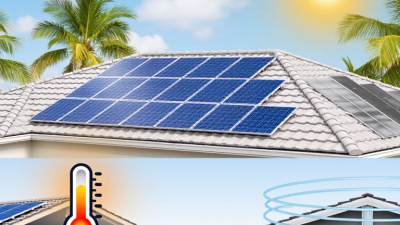
Climate changes the decision. In hot regions, compare power loss per degree above 25°C; lower losses usually support stronger summer output. In cloudy areas, low-light response and inverter design deserve closer attention. NREL’s PVWatts model shows that local weather, tilt, shading, and system losses can materially change annual production estimates. Snowy homes should prioritize tested mechanical loading and suitable roof clearance. Dusty homes need easy cleaning access, because small losses can persist for months.
Field experience also exposes a common weakness: advertised peak output rarely matches a real roof. IEA PVPS reliability research has repeatedly highlighted degradation, moisture, thermal cycling, and installation quality as long-term performance factors. A practical comparison should include the temperature coefficient, degradation rate, wind and snow ratings, warranty terms, and modeled annual kilowatt-hours. Bifacial designs may add value over bright surfaces, but many dark shingles offer little rear-side gain. The “best” panel remains uncertain without a shade survey and hourly climate data. Forecasts are useful, but roofs are imperfect.
For 2026 buyers, the best residential solar panels are not simply the most efficient. A sensible evaluation starts with installed cost, warranty language, and roof conditions. Berkeley Lab’s Tracking the Sun 2024 report placed typical U.S. residential solar prices near $3 per watt in 2023. EnergySage’s 2025 Solar Marketplace Intel Report reported quoted prices around $2.50 per watt. Local labor can change the final figure considerably.
Read every warranty carefully. Many panels offer 25 to 30 years of performance coverage, but product coverage may be shorter. Check the permitted degradation rate, labor responsibility, and claim process. A panel rated at 90% output after 25 years sounds strong, yet poor ventilation can reduce real performance. That detail is often missed.
Installation quality matters more than a glossy specification sheet. An installer should inspect roof age, shading, wind exposure, cable routing, and structural capacity. NREL’s 2024 residential PV cost benchmark shows that hardware is only part of system pricing; soft costs remain significant. Ask for production estimates based on local weather data, not ideal laboratory conditions. I would also reserve money for future inverter replacement. That is not pessimism. It is practical budgeting. A cheaper system may win today, but a slightly higher-output panel can deliver better long-term value where roof space is limited. Still, every roof is different.
| Panel Type | Typical Efficiency | Common Residential Output | Indicative Module-Only Cost | Typical Product Warranty | Typical Performance Warranty | Expected Annual Degradation | Installation Considerations | Long-Term Value | Best Suited For |
|---|---|---|---|---|---|---|---|---|---|
| N-Type TOPCon Monocrystalline | 21.5%–23.5% | 400–500 W | Approximately $0.25–$0.45 per watt | 12–25 years, depending on the specification | 25–30 years | About 0.25%–0.40% per year | Standard residential mounting is usually suitable. Higher output can reduce the number of panels required on constrained roofs. | Excellent | Most homeowners seeking a strong balance of efficiency, price, availability, and long-term energy yield. |
| N-Type Heterojunction (HJT) | 21.5%–23.8% | 400–500 W | Approximately $0.35–$0.60 per watt | 15–25 years | 25–30 years | About 0.20%–0.30% per year | Works with conventional rooftop systems. Temperature performance is useful in hot climates, but installers should verify electrical compatibility and roof loading. | Very Good | Hot regions, premium installations, and buyers prioritizing lower degradation over the lowest initial price. |
| Back-Contact Monocrystalline | 22.0%–24.5% | 420–520 W | Approximately $0.45–$0.75 per watt | 25 years or more | 25–30 years | About 0.25%–0.35% per year | High power density can simplify installations on small roofs. A qualified installer should confirm dimensions, clamp zones, wiring, and inverter compatibility. | Excellent, but premium-priced | Small or complex roofs where maximizing energy production per square meter is more important than minimizing module cost. |
| Bifacial Monocrystalline | 20.5%–23.0% front-side efficiency | 400–500 W | Approximately $0.28–$0.50 per watt | 12–25 years | 25–30 years | About 0.25%–0.40% per year | Rear-side gains are limited on conventional dark-shingle roofs. Performance is generally more favorable with elevated mounting, reflective surfaces, or ground-mounted systems. | Good to Very Good | Light-colored roofs, elevated arrays, carports, or ground mounts where rear-side light can reach the cells. |
| Standard Monocrystalline PERC | 19.0%–21.5% | 350–450 W | Approximately $0.20–$0.35 per watt | 10–15 years on many remaining product lines | 25–30 years | About 0.35%–0.50% per year | Generally easy to install and widely understood by contractors. Buyers should check remaining inventory, warranty terms, and whether the lower efficiency requires additional roof area. | Good for budget projects | Large, unshaded roofs and projects where the lowest upfront module cost is the primary objective. |
| Small-Format High-Efficiency Panels | 20.5%–23.0% | 250–420 W | Approximately $0.35–$0.65 per watt | 15–25 years | 25–30 years | About 0.25%–0.40% per year | Useful for dormers, narrow roof sections, and irregular layouts. More panels, connectors, and mounting points may increase labor and balance-of-system costs. | Good for difficult roofs | Homes with multiple roof planes, dormers, setbacks, or limited uninterrupted installation areas. |
The best 2026 residential solar panel depends on the buyer’s actual roof, budget, and energy habits. Efficiency matters when roof space is limited. NREL’s 2024 PV System Cost Benchmark places residential system costs near $3.15 per watt before incentives, so every watt still affects the purchase decision.
Space matters. A high-efficiency panel can produce more electricity from a small, shaded roof. However, larger panels may be difficult to handle on older roofs or complex layouts. Buyers should compare temperature coefficients, low-light performance, degradation rates, and warranty terms. These details matter more than impressive laboratory efficiency alone. Real roofs are messier.
For buyers focused on long-term output, lower annual degradation may be valuable. The International Energy Agency Photovoltaic Power Systems Programme reports continued improvements in module performance, but field conditions can reduce expected production. Heat, dust, partial shade, and poor ventilation are easy to underestimate. NREL also notes that installation design strongly influences total system performance and cost. That is practical.
Budget-focused buyers should compare cost per usable kilowatt-hour, not only the panel’s purchase price. Homeowners with high summer consumption may value stronger heat performance. Families with limited daytime usage may need storage planning instead. A professional installer should model the roof with local weather data and shading measurements. A quick estimate can be wrong. I would question any recommendation that ignores roof orientation, electrical upgrades, or future household changes. The “top” panel is only top for a specific priority.
Matching solar-panel technology to individual buyer priorities
The chart uses representative midpoints from commonly published residential module specifications. Back-contact panels typically suit buyers prioritizing maximum efficiency and limited roof space; heterojunction panels are attractive in hot climates because of their low temperature-related power loss; TOPCon panels offer a balance of efficiency, output, and broad availability; and PERC panels can fit buyers focused on straightforward, cost-conscious installations. Actual specifications vary by model, climate, roof design, and installer.
Indicative benchmarks only: typical residential module efficiency ranges are approximately 19.5–22% for PERC, 21–23.5% for TOPCon, 21.5–23.5% for heterojunction, and 22–24% for back-contact designs. Rated output depends on module size and electrical configuration.
© 2025 All Rights Reserved