What Are the 2026 Best Solar Panels for House?
Choosing the 2026 best solar panels for house requires more than comparing wattage on a product label. A high-output panel may perform brilliantly on a sunny roof, yet disappoint when shaded by a chimney or covered with winter dust. This guide examines efficiency, temperature performance, degradation rates, warranties, installation quality, and real household energy patterns. It also considers practical details, such as roof space, panel weight, inverter compatibility, and performance during cloudy afternoons.
Dr. Martin Green, a leading photovoltaic researcher, has said, “Solar photovoltaic technology is now the cheapest electricity technology in history.” His view explains why solar technology continues improving, but price alone should not decide a purchase. A reliable solar panel must produce consistent energy for decades. It should also come from a manufacturer with transparent testing data and dependable warranty support.
There is no perfect panel.
Some rankings simplify the decision too much. They may overlook local heat, snow, roof orientation, or installer experience. This article therefore compares leading solar panels for house applications through both technical evidence and everyday use. You will see where premium panels may justify their cost, where budget models can be sensible, and where marketing claims deserve closer inspection. One limitation remains: product availability and prices can change quickly. Check current specifications before signing any contract.
What Makes a Solar Panel the Best Choice for a House in 2026
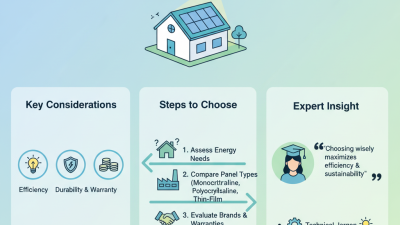
In 2026, the best solar panel is not automatically the one with the highest efficiency rating. It must fit your roof, climate, budget, and electricity use. On a south-facing roof, a high-efficiency panel can produce more power from limited space. Yet a slightly less efficient panel may deliver better value on a large, unshaded roof. Roof space matters. Review independent test data, temperature coefficients, expected degradation, and certified safety testing. A panel rated at 23% efficiency may still underperform if afternoon shade covers two rows.
A dependable choice also has clear warranty terms and transparent performance data. Ask for the product datasheet, not only a sales estimate. Compare the warranted output after 25 or 30 years. Small print matters. Check whether installation workmanship is covered separately from panel defects. Verify that the system suits local electrical requirements and your inverter’s operating range. An experienced installer should inspect roof age, wind exposure, drainage, and nearby trees before recommending equipment.
Real production rarely matches a perfect calculator forecast. Dust, heat, snow, and seasonal shadows can reduce output. I would leave room for those losses instead of trusting the highest projected number. A carefully measured roof, reliable monitoring, and documented installation often matter more than a flashy specification. The best household panel is the one that performs predictably on your actual roof, not merely on a laboratory sheet.
How to Compare Solar Panel Efficiency, Durability, and Performance
What Are the 2026 Best Solar Panels for House?
For a 2026 home project, compare efficiency, durability, and real-world output together. Fraunhofer ISE’s Photovoltaics Report 2024 lists leading commercial silicon modules above 23% efficiency. Higher efficiency can reduce the roof area required. However, it does not guarantee higher annual production. Shade, roof direction, heat, and inverter losses matter more than a laboratory percentage. A north-facing roof can erase much of that advantage.
NREL’s 2024 degradation review reports a median module degradation rate near 0.5% annually. After 25 years, that equals roughly 88% of the original output. Check the product’s degradation curve, not only its headline warranty. Review IEC 61215 and IEC 61730 certification, temperature coefficients, and mechanical-load ratings. I would not treat a laboratory result as a household promise. Dust, hail, salty air, and repeated hot-cold cycles can expose weaknesses. Independent reliability testing offers useful evidence, but testing conditions still differ from your roof.
Tips: Measure shade at 9 a.m., noon, and 3 p.m. Compare annual kilowatt-hours, not efficiency alone. Ask for wind and snow ratings. Check the installer’s workmanship coverage. Keep a photo of the roof before installation. Small records help when performance claims become difficult to verify. A slightly less efficient panel may perform better with stronger temperature behavior and fewer shaded losses. Ask for measured assumptions in writing.
Which Solar Panel Technologies Suit Different Home Conditions
Choosing the best solar panel for a house in 2026 depends on the roof, climate, and electricity demand. It is not simply a race for the highest efficiency rating. The IEA PVPS Trends 2024 report recorded about 447 GW of new photovoltaic capacity in 2023, showing how quickly residential technology is developing. Yet household results still depend heavily on installation quality.
For sunny roofs with limited space, high-efficiency monocrystalline panels using TOPCon, heterojunction, or back-contact cells can produce more electricity per square metre. The Fraunhofer ISE Photovoltaics Report shows leading commercial crystalline-silicon modules reaching roughly 23% to 24% efficiency. Hot climates need careful temperature testing, because output falls as cell temperature rises. Panels with lower temperature coefficients may perform better during long, intense summers. Ventilation beneath the modules also matters.
Shade changes the decision. Roofs near trees or chimneys may benefit from module-level power electronics and panels designed for partial-shade operation. Bifacial panels can help on bright roofs, elevated structures, or light-coloured surfaces, but their advantage may be small on a standard dark roof. Snowy or storm-prone areas require strong mechanical-load ratings, not attractive laboratory figures. Thin-film technology may suit lightweight roofs, although it usually needs more space. My practical concern is often overlooked: a perfectly rated panel can underperform when the roof survey is rushed.
What Are the 2026 Best Solar Panels for a House?
The most suitable technology depends on roof space, climate, shading, and temperature. Higher efficiency is especially valuable when the available roof area is limited.
Limited roof space
TOPCon, HJT, and IBC modules generally provide the highest commercial module efficiency.
Hot climates
HJT and IBC technologies typically have lower temperature-related power losses than conventional PERC modules.
Partial shading
Panel-level power electronics and careful string design often matter more than cell technology alone.
Large roofs or tighter budgets
PERC and thin-film panels can remain practical where roof area is less constrained.
Efficiency values are representative midpoints of commonly published commercial module ranges, not company or brand specifications. Actual performance varies by module design, installation angle, temperature, shading, and system equipment.
How to Evaluate Costs, Warranties, Installation, and Energy Savings
Choosing the 2026 best solar panels for your house requires more than comparing power ratings. Start with your yearly electricity use, roof direction, shade, and available space. A professional site assessment can reveal problems that online calculators miss. Ask for a written quote showing panels, inverters, mounting hardware, labor, permits, and future maintenance costs. The cheapest offer may not be the best value.
Study warranties carefully. Product coverage and performance coverage are different. Check who handles claims, what labor is included, and whether removal costs are excluded. Installation quality matters just as much as panel efficiency. Look for licensed installers, documented experience, roof protection methods, and clear inspection procedures. Request references from recent local projects. Energy savings also need realistic modeling. Compare estimated production with your utility rates, expected rate changes, battery costs, and available incentives. Savings can disappoint when shade or winter weather is underestimated.
Tips: Keep twelve months of utility bills. Get at least three detailed quotes. Ask how snow, dirt, and partial shade affect output. Do not accept verbal promises. Read every warranty limitation. I would also leave room in the budget for repairs, because forecasts are never perfect. A panel system may perform well, yet payback can take longer than expected. That is worth questioning before signing.