Get Solar Qualified With Our Smart Calculator!

GET ESTIMATE!

$0 Down, No Debt & No Payments for 12 Months, Power Up Smarter with New Solar Lease!

What Are the Top Types of Solar Power for Home in 2026?

Choosing solar power for home in 2026 requires more than comparing panel prices. Roof direction, shade, household demand, storage needs, and local electricity rules all influence the result. A bright south-facing roof may favor high-efficiency monocrystalline panels, while limited space could justify premium modules. Thin-film systems may suit unusual surfaces, although their lower efficiency can require more roof area. Building-integrated photovoltaics offer a cleaner appearance, but they often cost more and have fewer installation options.

The market is expanding rapidly. The International Energy Agency’s Renewables 2024 report projects solar photovoltaic technology will provide about 80% of global renewable capacity growth through 2030. IRENA reported approximately 1,865 gigawatts of installed solar capacity worldwide at the end of 2024. These figures show strong momentum, but global growth does not guarantee equal household savings. Local tariffs matter more than headlines.

Storage changes the calculation. The National Renewable Energy Laboratory’s residential PV research shows that batteries can improve self-consumption and backup value, but system economics depend heavily on battery prices and usage patterns. SEIA and Wood Mackenzie also continue to identify residential solar as a major distributed-energy segment in the United States. Still, reports cannot predict every roof, inverter, or winter bill. A practical comparison should examine monocrystalline rooftop systems, thin-film designs, solar shingles, community solar, and solar-plus-battery packages. The best option is rarely the newest one. It is the system that matches real household behavior, available sunlight, and a carefully checked installation quote.

What Are the Top Types of Solar Power for Home in 2026?

What Is Residential Solar Power and How Does It Work?

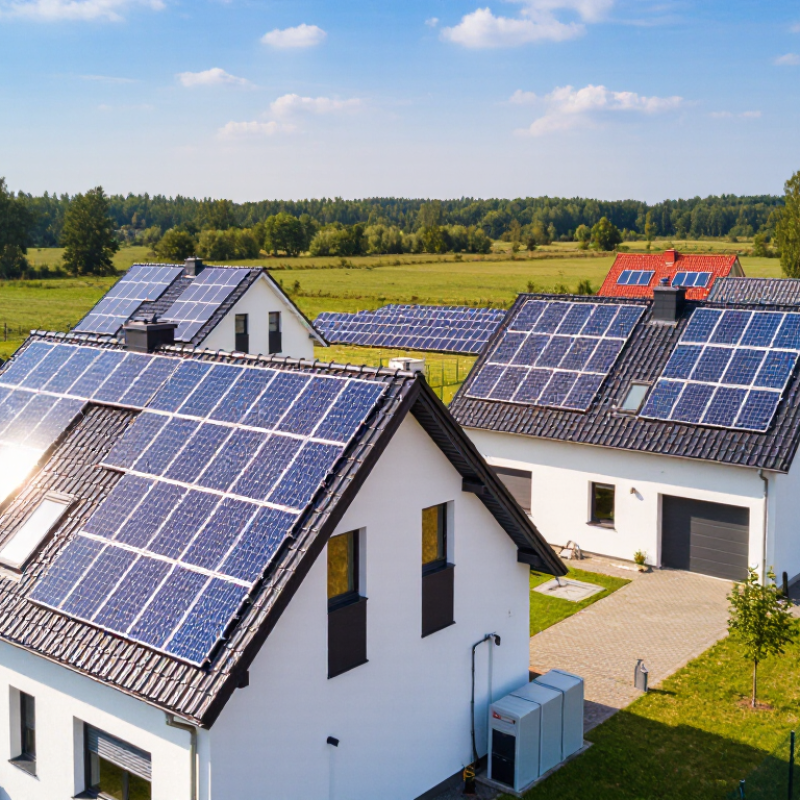
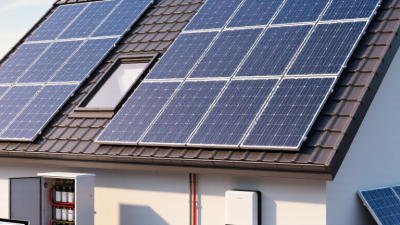
Residential solar power usually means a photovoltaic system installed on a home’s roof, wall, or nearby ground. Solar panels convert sunlight into direct-current electricity. An inverter changes it into alternating current for household appliances. The process is quiet and automatic.

The system can serve lights, refrigerators, heat pumps, and electric vehicles. Extra electricity may flow to the grid, depending on local rules. A battery can store daytime production for evening use. The U.S. Department of Energy explains that system output depends on sunlight, panel direction, shading, temperature, and equipment design. Real roofs are rarely perfect.

Solar power is expanding quickly. IRENA’s Renewable Capacity Statistics 2024 recorded about 1,419 gigawatts of global solar capacity at the end of 2023. Solar added roughly 346 gigawatts that year. In the United States, Lawrence Berkeley National Laboratory’s Tracking the Sun 2024 report found that the median residential system installed in 2023 was about 7.4 kilowatts. That figure is useful, but not universal. A shaded roof may need more panels, while an efficient home may need fewer. Household electricity use should be measured before choosing rooftop PV, battery storage, or a shared solar arrangement. Small errors matter.

What Are the Main Types of Solar Power Systems for Homes?

For homeowners in 2026, the main types of solar power systems are:

grid-tied

A grid-tied system connects rooftop panels directly to the local electricity network. It usually costs less because it needs fewer batteries. However, it may stop working during a blackout unless backup equipment is installed.

off-grid

An off-grid system operates independently from utility lines. It uses solar panels, batteries, and often a backup generator for cloudy periods. This option suits remote homes, but accurate energy planning is essential. A small battery can leave lights off before sunrise.

hybrid

A hybrid system combines grid access with battery storage. It can store midday solar power for evening use and provide limited backup during outages. In my experience, hybrid systems offer flexibility, but their higher cost deserves careful review.

No system is perfect.

Tips:

Check your last twelve months of electricity bills before choosing equipment. Measure roof shade at different times, especially near chimneys and trees. Ask a qualified installer about battery capacity, panel orientation, maintenance, warranties, and local connection rules. Do not size a system from summer usage alone. That mistake can create winter shortages. Also, realistic expectations matter; panels produce less energy on short, cloudy days, even with excellent installation.

How Do Rooftop, Ground-Mounted, and Community Solar Compare?

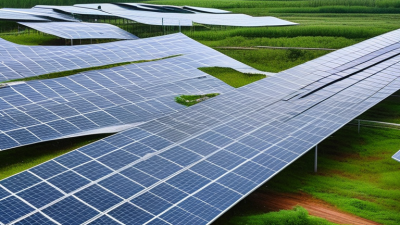
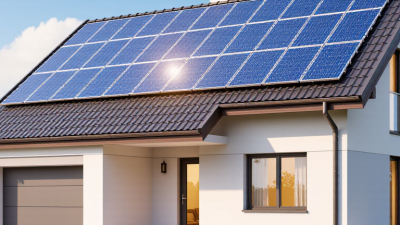
For many households, rooftop solar remains the most direct choice. Panels sit above the home, using unused space and reducing electricity purchased from the grid. The IEA’s Renewables 2024 report expects distributed solar to provide about 42% of global photovoltaic growth through 2030. However, roof age, shading, orientation, and local rules can change the result. A small roof may produce less than expected.

Ground-mounted systems need open land, but they offer easier maintenance and better panel positioning. They can also support larger arrays than most rooftops. NREL’s 2024 cost benchmarks show that larger solar systems generally achieve lower costs per watt than residential installations. Yet excavation, fencing, drainage, and permitting may add significant expenses. Land is not free.

Community solar serves households without suitable roofs. Subscribers receive credits for electricity generated by a shared project, often located nearby. The U.S. Department of Energy’s National Community Solar Partnership set a goal of 20 gigawatts of community solar by 2025, enough to serve millions of homes. This option avoids roof repairs and on-site equipment. Savings, contract terms, and project availability still vary widely. Read the billing rules carefully. My practical view is imperfect: the cheapest system on paper may not be the easiest to live with. Local sunlight, roof condition, land access, and household electricity use should decide the comparison.

What Are the Top Types of Solar Power for Home in 2026? - How Do Rooftop, Ground-Mounted, and Community Solar Compare?
Comparison Dimension Rooftop Solar Ground-Mounted Solar Community Solar
Basic Structure Photovoltaic panels installed on a home's roof, usually connected to the property's electrical panel. Panels installed on a fixed structure or tracking system on privately owned land near the home. A shared solar project supplies electricity credits to multiple subscribers connected to the local utility grid.
Typical Residential Size Approximately 4–12 kW for many single-family homes, depending on electricity use, roof area, and local sunlight. Approximately 5–15 kW for a home-sized installation, with fewer space limitations than a roof system. Usually no equipment is installed at the subscriber's home; the subscriber purchases or receives a share of project output.
Space Requirement About 250–750 square feet of usable roof area for a 4–12 kW system, depending on panel efficiency and layout. Typically requires more total land than the panel footprint because of row spacing, access, setbacks, and equipment. No private property space is normally required, although project availability depends on a suitable local site.
Sunlight and Shading Performance can be reduced by roof orientation, chimney shadows, nearby trees, and complex roof sections. Panels can generally be oriented and spaced for strong solar exposure, making shading easier to manage. Depends on the shared project's site design, orientation, equipment, and operating conditions.
Installation Complexity Moderate. Work may include roof assessment, structural attachments, electrical upgrades, permitting, and utility approval. High. Work may include site preparation, foundations, trenching, fencing, grading, permitting, and longer electrical runs. Low for the household because the project owner generally manages construction and system maintenance.
Upfront Cost to Household Usually the highest initial household commitment among the three options when purchased outright, although financing may reduce the upfront payment. Often higher than rooftop solar because of land preparation, racking, trenching, and additional wiring. Usually low or zero upfront cost, depending on the subscription agreement and local program structure.
Ownership Options Homeowners may purchase the system outright or use a loan, lease, or power-purchase arrangement where available. Most practical when the homeowner owns suitable land and is prepared to own or finance the equipment. Subscribers generally pay for a share of electricity production or receive bill credits without owning the physical array.
Electricity Bill Impact Can substantially reduce grid electricity purchases; savings depend on system output, utility rates, and export-credit rules. Can substantially reduce grid electricity purchases and may produce more consistently when the array has better orientation and less shading. Typically reduces the utility bill through energy credits, subject to subscription terms, project output, and local regulations.
Battery Compatibility Highly compatible with behind-the-meter batteries for backup power and shifting solar energy to evening hours. Highly compatible with batteries, although additional electrical equipment and a longer connection may be required. A subscriber usually cannot directly use the shared system for whole-home backup; separate battery equipment may be needed.
Backup Power During Outages Solar panels alone generally do not provide backup during a grid outage. A properly configured battery and essential-load controls are normally required. Solar panels alone generally do not provide backup during a grid outage. A battery and suitable islanding equipment are normally required. Normally does not provide physical backup power to the subscriber's home because electricity remains supplied through the utility grid.
Maintenance Needs Generally low. Periodic inspections, monitoring, inverter servicing, and occasional cleaning may be needed. Generally low to moderate. Maintenance may include vegetation control, access-road upkeep, cleaning, inspections, and equipment servicing. Low for the subscriber because project maintenance is usually handled by the system owner or operator.
Roof Condition Requirement Best installed on a roof with sufficient remaining service life; roof repairs or replacement may be advisable before installation. Not dependent on roof condition, which can be useful when the roof is shaded, small, steep, or nearing replacement. Not dependent on the subscriber's roof condition.
Land and Roof Ownership Most suitable for homeowners who control the roof and expect to remain at the property for several years. Requires suitable land, ownership rights, and adequate distance from the home or grid connection point. Suitable for renters, apartment residents, homeowners with unsuitable roofs, and households without usable land, where programs are available.
Moving to a New Home Moving may require transferring the system, paying off financing, or removing the equipment, depending on the contract. Moving may be complicated because the system is tied to the land and may need to be sold with the property. Often easier to cancel or transfer, but portability depends on the subscription contract and availability at the new address.
Permitting and Utility Approval Commonly requires local building and electrical permits plus utility interconnection approval. Usually involves building, electrical, zoning, land-use, and utility approvals; requirements may be more extensive than for rooftops. Permitting and interconnection are generally managed at the project level rather than by each subscriber.
Environmental Footprint Uses existing building space and typically avoids additional land disturbance. May require clearing or altering land, although previously disturbed or low-value land can reduce impacts. Shares land and infrastructure across many subscribers, potentially improving land-use efficiency per participating household.
Best Fit For Homeowners with a suitable, unshaded roof who want direct control over generation and potential long-term savings. Homeowners with available land who want flexible panel orientation, easy access, and potentially larger system capacity. Renters, apartment residents, and households with shaded, small, unsuitable, or leased roofs.
Main Advantages Uses existing roof space, provides direct on-site generation, supports batteries, and can increase energy independence. Offers flexible orientation, easier access for maintenance, less dependence on roof condition, and room for system expansion. Requires little household equipment, has low installation responsibility, and expands access to solar beyond suitable properties.
Main Limitations Limited by roof size, shading, structural condition, orientation, local rules, and the home's future ownership plans. Requires suitable land, may cost more to install, and can face zoning, visual-impact, security, and environmental concerns. Availability is location-dependent, savings may be less predictable, and it generally does not provide household backup power.
Overall Suitability Score ★★★★★ ★★★★☆ ★★★★☆

Note: Figures are typical planning ranges rather than guarantees. Actual system size, cost, savings, output, permits, tax treatment, and community-solar terms vary by location, utility rules, site conditions, household electricity use, and applicable regulations in 2026.

Which Solar Technology Best Fits Different Home Energy Needs?

What Are the Top Types of Solar Power for Home in 2026?

Choosing solar technology depends on how your household uses energy, not just roof size. Standard rooftop photovoltaic panels suit homes with strong daytime demand, such as remote workers or households running pool pumps. Monocrystalline panels usually deliver high output in limited roof space. They can perform well when morning or afternoon shading affects part of the roof.

Battery storage fits homes with evening electricity use, frequent outages, or time-based utility prices. A battery can store midday solar power for cooking, cooling, and lighting after sunset. It also helps reduce grid dependence. However, it adds cost, weight, and maintenance considerations. A larger battery is not automatically better. Your hourly consumption matters more.

Solar water heating may serve families with high hot-water demand, especially in sunny climates. It can reduce electricity used by water heaters, but it does not replace rooftop solar for general appliances. Thin-film systems may work on unusual roofs, although they often need more surface area. In practical assessments, roof orientation, local weather, wiring condition, and future energy changes deserve attention. A home audit should include a full year of utility bills. My early estimates have sometimes missed seasonal heating loads. That mistake can distort system sizing. Professional installers should also check structural strength, fire access, permits, and battery ventilation before proposing equipment.

Top Types of Solar Power for Homes in 2026

Which solar technology best fits different home energy needs?

How to read this chart: Monocrystalline and bifacial modules generally provide the highest efficiency where roof space is limited. Thin-film solar can be useful on lightweight or irregular surfaces, while photovoltaic-thermal systems can support homes that need both electricity and hot water. Actual performance depends on climate, roof orientation, shading, system design, and installation quality.

Values show representative module-efficiency levels based on commonly reported technology ranges. Bifacial gains depend on reflective ground surfaces and system installation.

What Factors Should Homeowners Consider Before Choosing Solar Power?

What Are the Top Types of Solar Power for Home in 2026?

Choosing solar power starts with your home, not a sales estimate. Rooftop photovoltaic panels suit houses with strong sunlight and usable roof space. Ground-mounted systems can perform better when roofs face unsuitable directions. Solar batteries store daytime energy for evening cooking, heating, or outages. Solar thermal systems may help with hot water, but they serve a narrower purpose.

Homeowners should inspect roof age, shading, local weather, and yearly electricity use. A chimney shadow can reduce output across several panels. Roof repairs may cost less before installation, not after it. Check the system’s expected production, warranty terms, maintenance needs, and connection rules. Battery capacity also matters. An oversized battery can increase costs without improving daily savings. Local incentives change often, so verify current information with official authorities and qualified installers.

Tips:

  • Review twelve months of electricity bills.
  • Ask for hourly production estimates.
  • Compare one battery-free design with one battery-ready design.
  • Request itemized costs, including permits and future repairs.
  • Do not ignore winter performance.
  • A sunny summer can create unrealistic expectations.
  • I would also question any promise of complete energy independence; many homes still use grid power during dark, cold periods.
  • Small assumptions can become expensive.
Scroll to Top