7 Best Solar Panels for Home Cost in 2026?
Choosing among the 7 Best Solar Panels for Home Cost in 2026 requires more than comparing panel prices. The real figure includes equipment, labor, permits, financing, roof preparation, maintenance, and possible battery storage. A low quote can become expensive when important work is excluded. That happens more often than homeowners expect.
EnergySage’s 2025 Solar Marketplace Intel Report placed the average quoted residential solar price near $2.50 per watt before incentives. NREL’s residential PV benchmarks show higher modeled costs, especially when storage, complex roofs, or regional labor rates are included. SEIA and Wood Mackenzie also report continued solar growth, although policy changes and supply conditions can influence final prices. These figures are useful guides, not promises. Your roof still decides much of the outcome.
Vikram Aggarwal, founder and CEO of EnergySage, advises homeowners to compare the complete value of a system rather than chase the lowest initial quote. That principle matters when reviewing solar panels for home cost. A 400-watt panel may look attractive, but its warranty, degradation rate, temperature performance, and installer quality can matter more over twenty-five years. The cheapest option is not always the safest investment. Sometimes, the neatest spreadsheet hides the messiest assumption. This guide examines seven leading choices, their realistic installed costs, and the trade-offs behind each recommendation. Pricing can change quickly in 2026, so verify local quotes, incentives, and financing terms before signing anything.
2026 Home Solar Panel Costs: Key Factors That Shape the Price
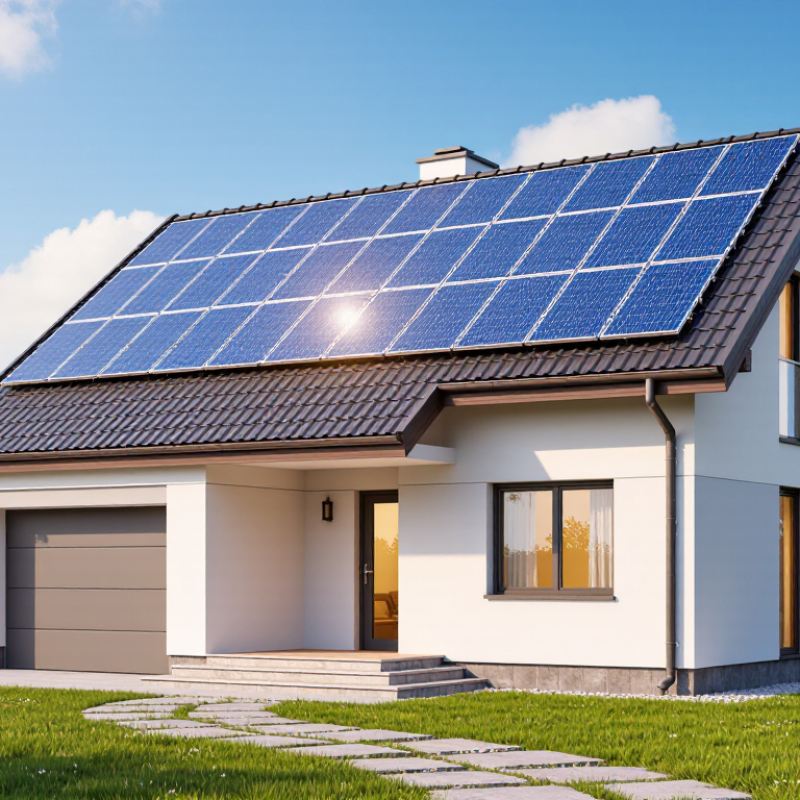
In 2026, home solar costs depend on more than the panels themselves. A typical residential system may cost several dollars per watt before incentives, but local prices vary widely. System size matters most. A larger roof may need more panels, stronger wiring, and a larger inverter. However, buying extra capacity can be wasteful if household electricity use remains low.
Roof condition also changes the final bill. Old shingles, steep angles, shading, and difficult access can increase labor costs. A south-facing roof is often helpful, but it is not essential. Experienced installers should check roof structure, annual sunlight, electrical capacity, and local permit requirements before quoting. Battery storage adds a major expense, especially when backup power is important. It also requires suitable indoor or outdoor space.
Ask for an itemized estimate.
The most useful comparison is the total installed price, not the advertised panel price. Review equipment, labor, permits, monitoring, warranty coverage, and future maintenance separately. Financing can reduce the monthly payment, yet interest may raise the long-term cost considerably. Tax credits or local incentives may also change the calculation, but eligibility rules can change during 2026. Online calculators are convenient, though they often overlook roof repairs and service upgrades. I would request at least three written quotes and question unusually low estimates. My own caution is simple: projected savings are never guaranteed, because utility rates, weather, and household usage can shift.
How to Compare the Seven Best Solar Panels for Residential Use
Comparing the Seven Best Solar Panels for Residential Use
In residential assessments, I compare more than headline efficiency. A panel producing 22% efficiency may suit a small roof, but a lower-cost panel can deliver better value on larger surfaces. Measure usable roof area, shading, roof direction, and local sunlight before comparing prices. A 2026 quote should show total cost per watt, installation labor, permits, monitoring, and estimated annual output.
The seven strongest options should be reviewed across five practical areas: efficiency, temperature performance, degradation rate, warranty coverage, and independent testing. Check how each panel performs during hot afternoons, not only under laboratory conditions. Temperature coefficients matter in warm climates. Lower degradation may protect long-term production. Review the warranty language carefully. Some coverage sounds generous but includes strict installation requirements.
Real homes often expose weaknesses that product sheets miss. Dust, partial shade, snow, and limited roof space can change the ranking. I would request three written quotes using identical assumptions. Then compare projected output over 25 years, not just the starting price. Be cautious with unusually high savings estimates. They may assume perfect weather or rising electricity rates. That part deserves doubt. Installer experience also matters, because poor wiring or roof penetrations can reduce performance. I would still inspect recent project photos and verify licensing, insurance, and third-party certifications before signing. Seven panels can look nearly identical on paper, yet their real value may differ sharply after installation.
7 Best Solar Panels for Home Cost in 2026? - How to Compare the Seven Best Solar Panels for Residential Use
| Panel Type |
Typical Power per Panel |
Module Efficiency |
Annual Degradation |
Typical Product Warranty |
Estimated Panel-Only Cost |
Estimated Installed Cost |
Best For |
| N-Type TOPCon Monocrystalline |
400–460 W |
20.5%–23.5% |
About 0.30%–0.40% |
25–30 years |
$110–$190 per panel |
$2.50–$3.40 per watt |
Most homeowners seeking a strong balance of efficiency, durability, and price |
| Interdigitated Back Contact Monocrystalline |
420–500 W |
21.5%–24.5% |
About 0.25%–0.35% |
25–40 years |
$160–$280 per panel |
$2.90–$4.00 per watt |
Small roofs where maximum power from limited space is important |
| Heterojunction Monocrystalline |
410–480 W |
21.0%–24.0% |
About 0.25%–0.35% |
25–30 years |
$150–$270 per panel |
$2.90–$4.10 per watt |
Hot climates and locations where temperature performance matters |
| Conventional P-Type Monocrystalline |
380–450 W |
19.0%–22.5% |
About 0.40%–0.55% |
20–25 years |
$80–$150 per panel |
$2.30–$3.20 per watt |
Budget-conscious projects with adequate roof space |
| Bifacial Glass-Glass Monocrystalline |
400–470 W |
20.0%–23.5% |
About 0.30%–0.45% |
25–30 years |
$120–$220 per panel |
$2.70–$3.80 per watt |
Elevated installations, bright surfaces, and ground-mounted residential systems |
| CIGS Thin-Film |
120–180 W per module |
13.0%–18.0% |
About 0.30%–0.60% |
10–25 years |
$90–$180 per module |
$3.00–$4.50 per watt |
Architectural applications and roofs where shade tolerance is a priority |
| Flexible Thin-Film |
100–200 W per module |
10.0%–17.0% |
About 0.50%–1.00% |
5–15 years |
$100–$250 per module |
$3.50–$6.00 per watt |
Lightweight structures, curved surfaces, and roofs with limited load capacity |
Cost assumptions: These are estimated 2026 U.S. residential market ranges shown in U.S. dollars. Installed costs are expressed per watt before incentives and typically include panels, inverter equipment, mounting, labor, permitting, and standard electrical work for a conventional roof. A typical 6 kW residential system may therefore cost approximately $13,800–$36,000 before incentives, depending on panel type, roof conditions, location, and installation complexity.
Top Solar Panel Types, Efficiency Ratings, and Expected Lifespans
7 Best Solar Panels for Home Cost in 2026?
For a 2026 home system, panel efficiency matters more when roof space is limited. Monocrystalline silicon panels commonly deliver about 20% to 23% efficiency, according to Fraunhofer ISE’s Photovoltaics Report. Thin-film panels usually occupy more roof area, but they can perform better in weak or diffuse sunlight. Polycrystalline panels remain a lower-cost option, although their market share continues to shrink. Cost depends on installation, permitting, storage, and local labor, not panel price alone.
A practical seven-panel shortlist should compare efficiency, temperature performance, warranties, and measured degradation. The National Renewable Energy Laboratory reports a typical photovoltaic degradation rate near 0.5% annually. That suggests roughly 88% of initial output after 25 years, assuming average conditions. Many modern panels are designed for 25 to 30 years, while well-maintained systems may operate longer. Real roofs are less tidy. Dust, shade, hail, and poor ventilation can reduce production.
The IEA Photovoltaic Power Systems Programme highlights crystalline silicon’s dominant role in global deployment because of its improving efficiency and established manufacturing base. For hot climates, check the temperature coefficient carefully. Output falls as panel temperature rises. A high-efficiency panel is not automatically the best purchase. The Solar Energy Industries Association and Wood Mackenzie also show that total residential system costs include substantial soft costs. I would compare annual energy estimates, not impressive laboratory ratings alone.
7 Best Solar Panels for Home Cost in 2026
Comparison of common residential solar panel types by estimated installed cost, typical module efficiency, and expected service life. Costs are representative 2026 U.S. planning estimates before tax credits and local incentives.
N-type TOPCon and heterojunction panels generally provide the highest efficiency, while monocrystalline PERC offers a balanced combination of price, performance, and availability. Thin-film panels can be useful where low-light performance or unusual installation surfaces are more important than maximum power density. Actual costs vary by roof design, system size, labor, permitting, storage, and location.