Get Solar Qualified With Our Smart Calculator!
GET ESTIMATE!Choosing the right home solar power system requires more than comparing panel prices. Real homes vary. Roof direction, seasonal shade, electricity demand, and local weather all affect performance. A system that suits a sunny ranch house may disappoint on a narrow, shaded roof. Details matter.
Begin with your actual energy use, not an attractive sales estimate. Review twelve months of utility bills and note high-demand periods, such as summer cooling or winter heating. A qualified solar professional can assess roof structure, panel placement, inverter options, and battery needs. Ask for written production estimates based on documented assumptions. Clear explanations build trust.
Equipment quality also deserves careful attention. Compare efficiency ratings, product warranties, performance guarantees, and expected degradation. Check whether the installer has relevant certifications, verifiable reviews, and experience with similar properties. Request separate costs for equipment, labor, monitoring, maintenance, and possible electrical upgrades. Ask what happens if production falls below expectations.
Batteries may improve resilience, but they can increase system cost and complexity. Their value depends on outage frequency, usage patterns, and available programs. A larger system is not automatically better. That assumption fails. Oversizing may produce limited financial value, while undersizing can leave important appliances unsupported. Consider practical details, such as whether the system can power a refrigerator, medical equipment, or internet equipment during an outage.
Reliable decisions also require modest skepticism. Solar savings projections are estimates, not promises. Weather changes. Utility rates change. Even reputable equipment can need service. Compare several proposals and preserve every document. An informed choice balances performance, safety, cost, and long-term support, rather than chasing the lowest initial quote.
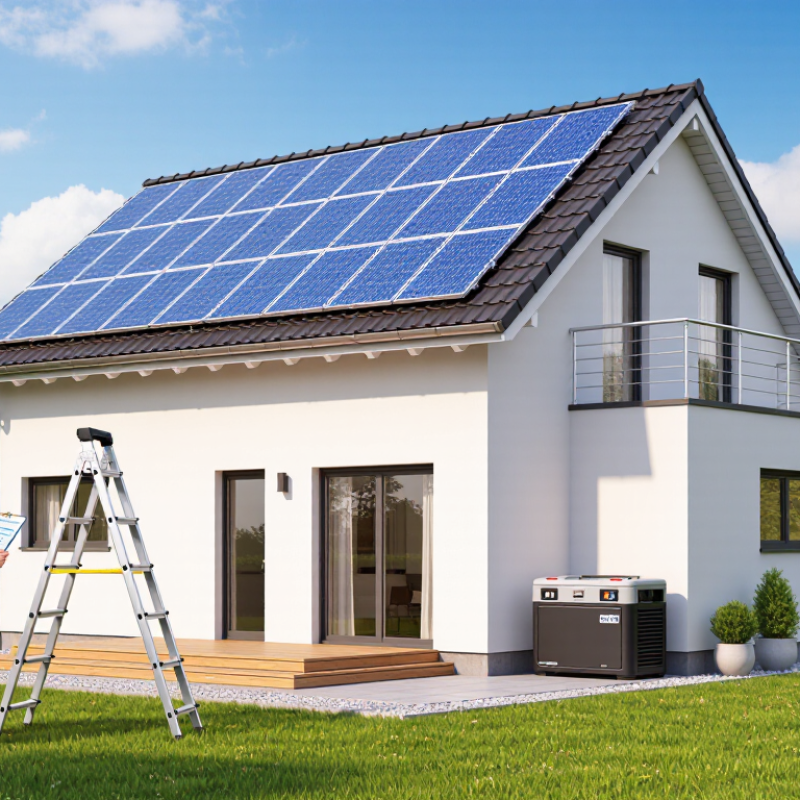
Choosing the best home solar power system starts with your electricity habits, not panel size. The U.S. Energy Information Administration reported average residential use of about 899 kWh per month in 2023. Your home may differ sharply. Check twelve months of utility bills, then mark high-use periods, such as evening cooking, air conditioning, or electric vehicle charging.
A 5-kilowatt system will not produce 5 kilowatts all day. Output changes with sunlight, roof direction, temperature, and shade. The International Energy Agency’s PVPS Trends 2024 report recorded more than 1.6 terawatts of global solar capacity by the end of 2023. That growth proves solar’s scale, but it does not guarantee equal performance at every address. A shaded chimney can reduce production during valuable morning hours. Use a site assessment and hourly production estimates rather than annual averages alone.
Battery sizing requires similar care. Review your evening load before choosing storage. A smaller battery may cover lights, refrigeration, and internet equipment, while larger storage supports longer outages. However, backup duration depends on usable capacity and peak power, not capacity alone. My first estimate was too optimistic because I ignored winter heating demand. That mistake matters. Compare projected annual generation with your actual consumption, include future changes, and request assumptions in writing. Reliable planning leaves room for cloudy weeks, equipment losses, and imperfect forecasts.

Comparing Solar Panel Types and System Components
Choosing a home solar system starts with the panel, but the panel is not the whole system. Monocrystalline panels usually deliver higher efficiency in limited roof space. Polycrystalline panels can cost less, although they may need more area. Thin-film panels are lightweight and flexible, but their lower efficiency suits specific roofs better. In rooftop assessments, I would check shade at 9 a.m., noon, and late afternoon. A clear roof can still lose production near chimneys or nearby trees.
The inverter deserves equal attention. A string inverter is practical for roofs with consistent sunlight. Microinverters can manage panels separately, which helps when shade affects only part of the roof. Battery storage adds evening energy, but its usable capacity matters more than its advertised capacity. Ask about round-trip efficiency, operating temperature, warranty terms, and replacement costs. Mounting rails, weatherproof wiring, disconnects, and monitoring equipment also affect safety and long-term performance. Small components matter.
A reliable evaluation uses measured roof dimensions, local sunlight data, and recent electricity bills. Request production estimates based on realistic losses, not perfect laboratory conditions. Check the installer’s licensing, electrical qualifications, insurance, and inspection history. Written maintenance procedures are useful. So are clear warranty exclusions. I would not choose the highest output automatically; a slightly smaller system may fit the roof and budget better. My own early estimates have sometimes overlooked winter shading. That mistake changed the design. Be willing to question impressive numbers.
A good home solar power system begins with the roof, not the equipment catalogue. Check the roof’s age, material, slope, and load-bearing condition. A roof nearing replacement may create avoidable removal costs later. Look closely for cracked tiles, soft decking, exposed fasteners, or moss around shaded edges. A qualified installer should inspect rafters and attachment points, not just photograph the surface.
Sunlight must be measured across the year. In the northern hemisphere, a mostly south-facing roof usually receives strong solar exposure, while east- and west-facing areas can still work. Morning shadows from trees, chimneys, or nearby buildings matter. The National Renewable Energy Laboratory’s PVWatts model accounts for tilt, azimuth, weather, and shading when estimating production. Use measured data rather than a bright afternoon impression. It can be misleading.
Available space also limits system size. Reserve clear areas around vents, skylights, and roof boundaries, while following local fire-access rules. The IEA Photovoltaic Power Systems Programme reported more than 1.6 terawatts of global photovoltaic capacity by the end of 2023, showing how mature the technology has become. Yet mature technology does not remove site-specific uncertainty. A small roof with excellent sunlight may outperform a larger, shaded roof. I would request an hourly shade study and a written production estimate. Do not accept a perfect forecast. Real trees grow, panels soil, and weather changes. A conservative estimate is often more useful.
| Evaluation Area | Key Factor | Practical Measurement | Generally Favorable Condition | Potential Concern | Recommended Action |
|---|---|---|---|---|---|
| Roof Condition | Roof age and remaining service life | Check installation records, visible wear, leaks, and the roof covering's expected service life. | A structurally sound roof with many years of service life remaining. | A roof near replacement age may require panels to be removed and reinstalled later. | Complete necessary roof repairs or replacement before installing the solar array. |
| Roof Condition | Structural capacity | Review the roof framing, mounting method, local wind and snow loads, and panel mounting hardware. | The roof can safely support the added equipment under local building requirements. | Aged, damaged, or undersized framing may need reinforcement. | Obtain a structural assessment from a qualified professional before final system design. |
| Roof Condition | Roof orientation and pitch | Record the direction each roof plane faces and its approximate slope. | A broad, unshaded roof plane with a moderate slope can simplify installation and improve annual production. | Multiple small roof planes or steep and complex sections can increase installation difficulty and cost. | Use a site survey to compare roof planes rather than judging suitability from orientation alone. |
| Sunlight | Annual solar access | Assess shade throughout the year from trees, chimneys, nearby buildings, and roof structures. | The planned array receives direct sunlight for most of the productive daylight period. | Frequent or long-duration shading can reduce energy production, especially when it affects multiple panels. | Use a shade analysis that accounts for seasonal changes in the sun's position. |
| Sunlight | Peak sun hours | Use a location-specific solar resource estimate expressed as equivalent full-sun hours per day. | The local solar resource is sufficient to meet the household's target energy needs with the available roof area. | Seasonal weather, frequent cloud cover, or limited winter sunlight may reduce annual output. | Base sizing on long-term local solar data and expected annual electricity use. |
| Sunlight | Seasonal shading and vegetation growth | Inspect tree height, canopy spread, and the direction of shadows during different seasons. | Nearby vegetation is stable, well-maintained, and does not shade the planned array during key production periods. | Fast-growing trees may create more shade over time, even if the roof is currently sunny. | Include future growth in the assessment and follow local rules before trimming or removing trees. |
| Available Space | Usable roof area | Measure unobstructed roof sections after allowing for setbacks, walkways, vents, skylights, and access requirements. | There is enough contiguous area to place the required number of panels without compromising roof access. | Small or fragmented areas may limit system size or require more complex wiring and mounting. | Create a scaled roof layout before selecting equipment or estimating capacity. |
| Available Space | Panel count and system capacity | Estimate panel count from target annual electricity use, local solar resource, system losses, and available area. | The roof can accommodate a system sized close to the home's electricity needs. | Limited space may require higher-efficiency panels, additional roof planes, or a smaller system. | Compare expected annual generation with utility bills rather than sizing from roof area alone. |
| Available Space | Obstructions and maintenance access | Map chimneys, vents, skylights, antennas, roof edges, fire-access paths, and service clearances. | The layout leaves required clearances and provides safe access for inspection and maintenance. | Crowded layouts can create safety issues, reduce usable capacity, or complicate future repairs. | Have the final layout reviewed for local fire, electrical, and building requirements. |
| Home Energy Needs | Electricity consumption pattern | Review at least 12 months of utility bills and note seasonal or time-of-day demand. | The planned system matches expected long-term consumption after considering efficiency improvements. | Future electric vehicles, heat pumps, additions, or electrification may increase demand. | Include realistic future electricity use in the system-sizing decision. |
| Electrical Design | Main service and connection capacity | Check the electrical panel rating, available breaker space, wiring condition, and utility interconnection requirements. | The existing service can accommodate the proposed system or can be upgraded economically. | An older or undersized service may require electrical work before interconnection. | Arrange an electrical review and confirm requirements with the local utility or authority having jurisdiction. |
| System Selection | Need for battery storage | Consider outage frequency, backup loads, electricity tariffs, export rules, and desired nighttime energy use. | Storage is selected for a clear purpose, such as backup power or shifting solar energy to later hours. | A battery may add cost and maintenance requirements without improving the financial result in every location. | Compare solar-only and solar-plus-storage designs using local tariffs and backup priorities. |
| Final Assessment | Overall site suitability | Combine roof condition, structural review, shade analysis, usable area, energy demand, and permitting requirements. | The site is structurally sound, mostly unshaded, adequately sized, and compatible with local electrical rules. | A single major constraint can affect system size, cost, installation timing, or expected output. | Request a detailed site assessment and production estimate before signing an installation agreement. |
Sizing begins with measured demand, not roof area. The U.S. Energy Information Administration reported average household electricity use near 899 kWh per month in 2022. That equals about 10,800 kWh annually. Your home may differ sharply. Electric heating, well pumps, and electric vehicles can raise demand. Download twelve months of utility bills. Mark seasonal peaks. A single summer bill can mislead.
A practical estimate divides annual demand by local solar yield. NREL’s PVWatts tool evaluates location, roof tilt, orientation, weather, and system losses.
For example, 10,800 kWh divided by 1,400 kWh per installed kilowatt suggests a system near 7.7 kW.
NREL field research commonly uses about 0.5% annual module degradation for long-term planning. A modest design buffer may help, but oversized systems can waste capital. My first estimate is rarely perfect. Actual production changes with shade, dust, snow, heat, and inverter limits.
Tips: Use hourly consumption data when possible. Keep shading estimates honest. A chimney shadow at 3 p.m. matters. Request a production model based on your roof’s azimuth and tilt, not a regional average. Compare estimated monthly output with your actual bills. Recheck the assumptions after one year.
Cost comparisons should begin with usable energy, not panel count. The National Renewable Energy Laboratory reported a residential solar benchmark of about $3.15 per watt in early 2024. A 6-kilowatt system could therefore approach $18,900 before incentives, although local labor and electrical upgrades change the result.
The U.S. Department of Energy notes that the federal clean-energy tax credit can cover 30% of eligible installation costs through 2032. Confirm eligibility with current tax guidance. Rules are not identical everywhere.
Installation quality protects long-term value. Check roof age, afternoon shading, attic access, and the main electrical panel before signing anything.
A professional site assessment should estimate annual production, not promise perfect savings. The International Energy Agency reported that global solar capacity exceeded 1.6 terawatts by the end of 2023, showing strong industry maturity.
Still, mature technology can be poorly installed. That is the uncomfortable part.
Battery storage deserves separate testing. It may improve evening self-consumption, backup power, and resilience, but it adds equipment, space, and replacement costs.
Compare round-trip efficiency, usable capacity, degradation assumptions, monitoring access, and warranty terms. The National Renewable Energy Laboratory finds residential solar-plus-storage costs materially higher than solar alone.
My own spreadsheet once favored a battery because it ignored future replacement timing. That mistake matters.
Ask for production estimates, incentive assumptions, maintenance terms, and payback calculations in writing. Check them against utility rates and export rules before choosing.
© 2025 All Rights Reserved