
Top No Cost Solar Providers for Global Buyers?
Choosing a no cost solar provider begins with understanding what “no cost” actually covers. In many offers, it means no upfront equipment payment, not free electricity or zero lifetime expense. A homeowner might see panels installed on a sunny roof without paying on installation day. The agreement may still include monthly charges, usage rates, or limits on system ownership. Read the terms closely. Small details matter.
Energy expert Amory Lovins has said, “The cheapest energy is the energy you don’t use.” That is a useful reminder: compare solar offers with efficiency upgrades and your current utility bill. For global buyers, availability, financing, equipment warranties, and service quality can differ sharply by location. Ask who owns the panels, how bills are calculated, and what happens if you move. Request a sample bill using your own recent electricity usage, not a best-case estimate. Check the installer’s track record and confirm who handles repairs. These checks take time. They can also reveal gaps in an attractive sales pitch. I would not call an offer “free” until its full costs are clear; that distinction is easy to miss. This guide will compare provider models and practical evaluation points, rather than promise one option suits every household. The strongest choice depends on your roof, consumption, local conditions, and comfort with a long-term agreement.
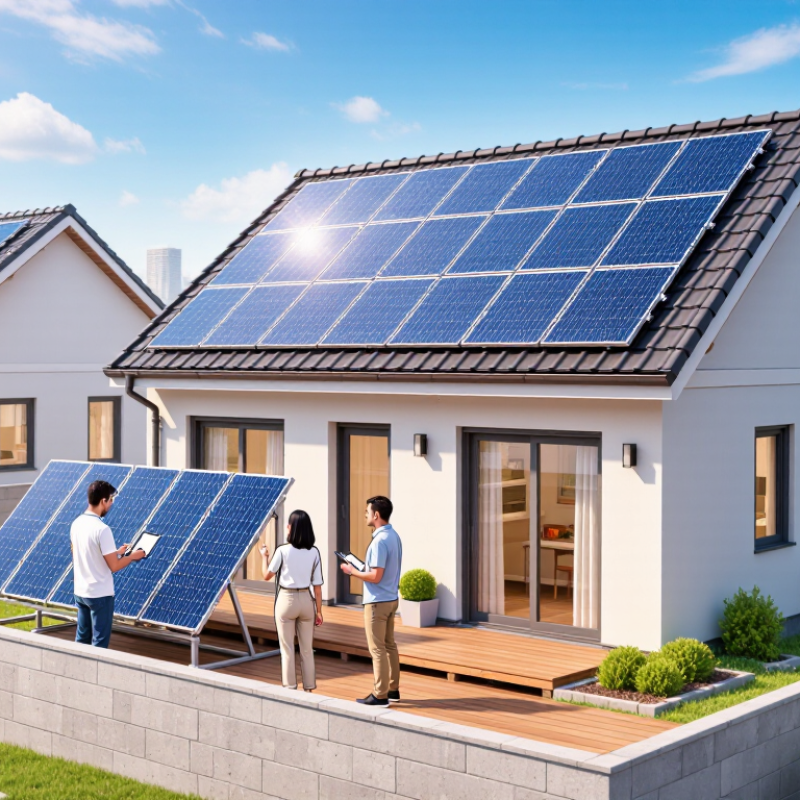
Table of Contents
[Hide]
What “No-Cost Solar” Means for Buyers in Different Markets
“No-cost solar” rarely means a system with no economic cost. It usually means little or no upfront payment, while the buyer pays through a lease, a power purchase agreement, or a financing plan. The arrangement matters. In one market, a household may pay a fixed monthly charge; elsewhere, payments may track each kilowatt-hour generated. The panels still need a sound roof and a suitable connection.
Local conditions change the offer. Utility export rates, sunlight, electricity prices, taxes, and available incentives can shape projected savings. A sunny roof is not enough. Ask who owns the equipment, who handles repairs, and what happens if you move or sell. Check whether quoted savings use current rates or optimistic future assumptions. Small print matters.
Compare the full payment schedule with your recent electric bills, not a sales estimate alone. Request production assumptions, degradation estimates, service terms, and any annual price increases in writing. In some places, a buyer may qualify only after a credit or property review. In others, public incentives reduce costs but do not eliminate them. I would be cautious about treating “free” as literal; the wording can hide trade-offs. A cloudy month can also make the numbers feel less certain.
Top No Cost Solar Providers for Global Buyers? - What “No-Cost Solar” Means for Buyers in Different Markets
“No-cost solar” is not a standardized global product. It may mean no payment at installation, rather than free equipment or electricity. The examples below describe common market mechanisms, not a ranking or a guarantee that an offer is available to every buyer.
| Market | What “no-cost” may mean | Who owns the system? | Potential ongoing costs or benefits | Buyer checks | Official information |
|---|---|---|---|---|---|
| United States | A solar lease or power purchase agreement (PPA) may require little or no upfront payment. This does not mean the system or electricity is free. | Usually the leasing or PPA provider owns the equipment during the contract. | The household generally makes lease payments or pays for solar electricity under the PPA. Utility bills may remain, and savings depend on production, rates, and contract terms. | Review escalators, payment obligations, maintenance, roof work, home sale or transfer rules, and the cost of buying out or removing the system. | U.S. Department of Energy: Homeowner’s Guide to Going Solar |
| Australia | A quoted price may be reduced by eligible small-scale technology certificates, or a finance offer may defer the upfront payment. Neither automatically makes the system free. | For a purchased system, the buyer generally owns it; a lease or finance contract may have different ownership terms. | Finance repayments may apply. Eligible certificate benefits are commonly reflected in the purchase price; exported electricity may receive a retailer feed-in tariff, subject to the applicable plan. | Check that the system and installation meet current eligibility rules, how certificate benefits are applied, the full financed price, and the export tariff conditions. | Clean Energy Regulator: Small-scale technology certificates |
| United Kingdom | A lease, subscription, or roof-use arrangement may avoid a large payment at installation, but the contract may include payments or other conditions. | Ownership depends on the arrangement; in a lease or roof-use model, a third party may own the panels. | Eligible generators may be paid for exported electricity through the Smart Export Guarantee. Export payments are not a payment for installation and do not by themselves make the system cost-free. | Check who pays for repairs, the contract length, roof access and maintenance terms, export-meter requirements, and what happens when the property is sold. | Ofgem: Smart Export Guarantee |
| Germany | A rental or leasing contract can reduce the initial payment, but it normally replaces that upfront cost with contractual payments. | The system may be owned by the lessor during the contract; ownership and any end-of-term transfer depend on the agreement. | Self-consumed solar electricity can reduce grid purchases. Eligible systems may receive feed-in remuneration under applicable rules; rates and conditions vary, including by commissioning date and system details. | Compare total contract payments with a purchase, and verify grid connection, metering, maintenance, remuneration eligibility, and end-of-contract options. | Federal Network Agency: Renewable energy funding |
| India | Eligible residential rooftop installations may receive government financial assistance under applicable program rules. Assistance is conditional and does not necessarily cover the full system cost. | In a customer-funded installation, the household generally owns the system; ownership under third-party finance arrangements depends on the contract. | The buyer may still need to fund the balance and pay for any financing, upgrades, or ongoing charges. Savings depend on local tariffs, system output, and self-consumption. | Confirm residential eligibility, approved installation requirements, subsidy disbursement conditions, the amount payable before and after assistance, and local net-metering rules. | Government of India: Rooftop solar program portal |
Before signing, compare the total payments over the contract term—not just the installation-day price—and confirm local eligibility, ownership, maintenance responsibility, export compensation, and exit or transfer costs.
Related Posts
-
2026 Best Solar Panels in PA for Global Buyers?
-
What Are the 2026 Best Solar Panels for House?
-

Discover the Best Solar Rebate Programs in China
-

What is the Importance of Solar Panels for Home Energy Solutions?
-
2026 Top Trends in Solar Power System Innovations and Technologies?
-
2026 How to Choose the Best Residential Solar Panels for Your Home?