Get Solar Qualified With Our Smart Calculator!
GET ESTIMATE!Solar power is no longer a niche upgrade for sunny rooftops. It is a major investment shaped by equipment, labor, storage, financing, and local electricity prices. The real solar panel system cost can change sharply between a compact home array in Texas and a larger commercial system in Germany.
IRENA’s Renewable Power Generation Costs in 2023 reported that utility-scale solar photovoltaic electricity averaged about $0.044 per kilowatt-hour globally. That figure reflects generation costs, not a homeowner’s final invoice. The IEA also reported that solar photovoltaic additions reached record levels in 2023, supported by falling module prices and strong policy demand. Prices moved quickly. They still do.
EnergySage founder and CEO Vikram Aggarwal has stated, “The cheapest solar system is not always the best value.” That point deserves attention. A low quotation may hide weaker warranties, limited monitoring, or unsuitable inverter capacity. Conversely, premium equipment may not improve payback on every roof. Small details matter: a shaded chimney, 30 feet of extra wiring, or a battery installed later can change the economics.
This guide compares ten common solar panel system types and their typical costs. It considers grid-tied, off-grid, hybrid, rooftop, ground-mounted, commercial, and battery-backed designs. Cost ranges are presented in U.S. dollars, using industry benchmarks where possible.
Treat these figures as planning estimates, not promises. Local labor, permitting, taxes, incentives, roof condition, and financing can alter the final price substantially. That uncertainty is inconvenient. It is also honest.
China Top 10 Solar Panel System Types and Costs
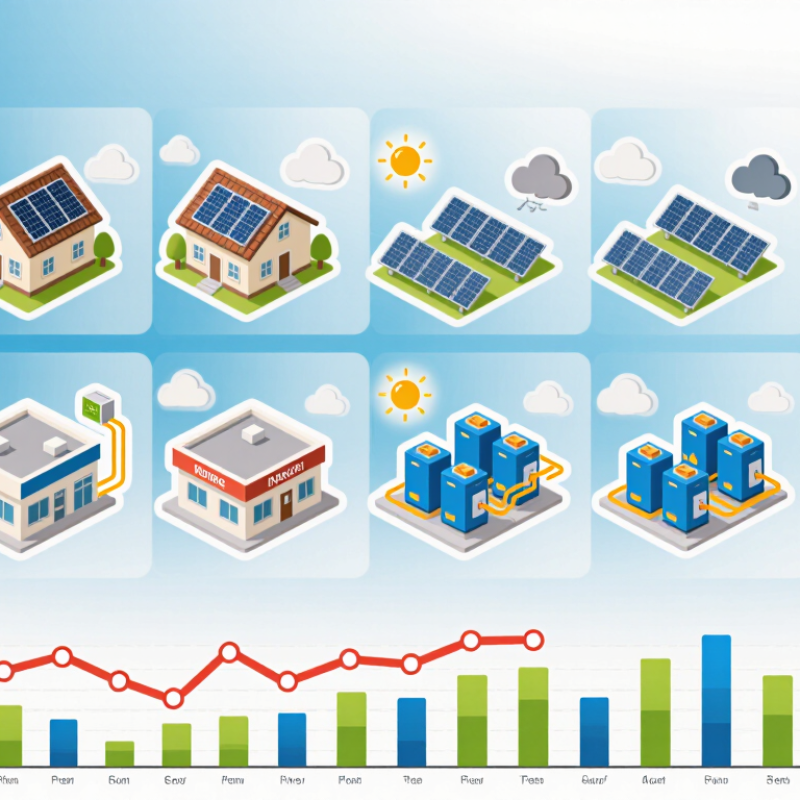
Solar systems in China usually match the building, grid access, and daily electricity pattern. Common categories include household grid-connected rooftops, hybrid systems with batteries, and fully off-grid systems for remote homes. Commercial rooftops serve shops, schools, and offices. Industrial rooftops use larger arrays and higher-voltage equipment. Utility-scale ground systems occupy broad, approved sites. Other practical categories include agricultural solar, fishery solar, building-integrated solar, and balcony plug-in systems.
A household grid-connected system commonly costs about RMB 3,000–5,500 per kilowatt, excluding difficult roof repairs. Battery-based systems may reach RMB 6,000–12,000 per kilowatt-hour of storage. Commercial rooftop projects often fall near RMB 2,500–4,500 per kilowatt, while utility-scale installations can cost roughly RMB 3,000–5,000 per kilowatt. Prices change with steel, cables, labor, land preparation, and connection distance.
Details matter more than a simple online quotation. A north-facing roof, partial shade, or weak structure can reduce output sharply. Engineers should check roof loading, drainage, fire access, grounding, and local grid requirements before installation. Agricultural and fishery projects need careful planning to protect crops, water quality, and maintenance routes. Balcony systems look convenient, but apartment rules and electrical safety still require verification. These estimates are useful, not final. Actual returns can disappoint when production data, battery losses, or seasonal demand are ignored.
China’s Top 10 Solar Panel System Types and Their Main Applications
China’s solar market now serves homes, farms, factories, transport, and remote communities. The IEA PVPS Trends 2024 report estimates that global photovoltaic additions exceeded 440 GW in 2023. Ten system types dominate practical planning: grid-tied rooftop systems for homes; off-grid systems for isolated cabins; hybrid systems with batteries; utility-scale ground arrays; floating solar on reservoirs; agrivoltaic systems above crops; building-integrated photovoltaics; solar carports; portable solar kits; and solar water-pumping systems. Each design has a different purpose, wiring layout, maintenance burden, and payback period.
Rooftop systems suit buildings with daytime electricity use. Ground arrays serve large industrial loads and electricity networks. Floating systems save scarce land, but water, wind, and corrosion need closer inspection. Agrivoltaics can reduce crop heat stress, although poor spacing may lower farm output. Building-integrated panels replace roof or facade materials, while carports create shaded parking and charging space. Off-grid and pumping systems are practical in western villages, construction sites, and drought-prone farmland. IRENA’s Renewable Power Generation Costs in 2023 reported a global weighted-average utility-scale solar LCOE of about 4.4 US cents per kWh, but local installation costs vary widely.
Tips: Check roof direction, shading, soil strength, water exposure, and seasonal electricity demand before choosing a system. Use certified installers and realistic load data. Small batteries are not always enough. This is where many plans become expensive. A professional site survey should compare upfront cost, replacement cycles, storage losses, and grid-connection fees. Some “low-cost” systems may perform poorly after dust, heat, or weak maintenance.
Typical installed cost ranges in China by system type, shown in USD per kW.
Utility-scale fixed-tilt systems generally have the lowest cost per kW because of economies of scale. Residential, off-grid, hybrid-storage, BIPV, and microgrid systems cost more because they require additional design, installation, power electronics, batteries, structural work, or control equipment. Values are indicative China-market installed cost ranges and exclude land acquisition, financing, taxes, and unusual grid-connection expenses.
China’s solar system cost depends on design, location, and operating goals. A small grid-connected rooftop system usually costs about RMB 2.5–4.5 per watt installed. Off-grid and hybrid systems cost more because batteries, backup controls, and safety equipment add substantial expense.
Solar modules often represent 35%–50% of the budget. Inverters may add 8%–15%, while mounting structures commonly require 8%–12%.
Cables, switches, monitoring devices, and protection equipment form another 10%–18%. Installation labor varies between urban rooftops, rural buildings, and large ground projects. Freight, engineering, permits, testing, and taxes can also change the final quotation.
Batteries can reshape the entire cost structure. For a hybrid system, storage may equal or exceed the module cost, especially when several hours of backup are required. Lithium-based storage needs a suitable battery management system and controlled installation conditions.
A cheaper quotation is not always better. I have seen estimates ignore roof reinforcement and cable upgrades. That creates trouble later. A neat spreadsheet can still be wrong.
Buyers should request itemized prices, warranty terms, expected annual output, and replacement assumptions. Chinese suppliers may quote equipment separately from local installation, which makes comparisons difficult. Currency changes and shipping costs deserve attention too. Estimates should be checked against recent site data, not copied from a generic calculator.
China’s solar system prices depend on more than panel capacity. System type matters first. Rooftop systems usually cost more per watt than large ground-mounted projects. They need extra labor, safety equipment, cable routing, and structural checks. Hybrid systems also add batteries, inverters, and energy-management controls. Off-grid systems require larger storage, especially where diesel backup is unavailable.
Module prices fell sharply in China during 2023 and 2024. Industry data from PV InfoLink placed mainstream module prices near or below US$0.10 per watt during parts of 2024. However, panels may represent only 35% to 50% of a complete rooftop system. The International Renewable Energy Agency reported a global utility-scale solar LCOE of about US$0.044 per kWh in 2023. China can be cheaper, but local conditions change the result. Land preparation, financing, grid connection, and labor remain important.
Battery selection can reshape the budget. Lithium iron phosphate storage often increases upfront costs, while improving safety and cycle life. China’s CPIA has repeatedly highlighted supply-chain oversupply and falling equipment prices. That does not guarantee a low installation quotation. A coastal roof may need corrosion protection, while a northern project may need snow-load engineering. In practice, installers should calculate annual yield, degradation, maintenance, and replacement costs. A simple price-per-watt comparison is incomplete. It can even be misleading. Real quotations still vary by province, roof condition, electricity tariff, and warranty terms.
| Rank | Solar System Type | Typical Application | Reference System Size | Indicative Installed Cost in China | Estimated Total Cost | Typical Annual Yield | Main Cost Drivers | Key Advantages |
|---|---|---|---|---|---|---|---|---|
| 1 | Residential Grid-Connected Rooftop System | Homes with suitable roofs and access to the public electricity grid | 5 kW | RMB 2.8–4.5/W | RMB 14,000–22,500 | 900–1,500 kWh/kW/year | Roof structure, installation difficulty, inverter capacity, local labor, grid connection, and region-specific solar irradiation | Lower upfront cost, simple operation, and the ability to use or export generated electricity |
| 2 | Commercial Rooftop System | Shopping centers, offices, schools, warehouses, and other commercial buildings | 100 kW | RMB 2.2–3.5/W | RMB 220,000–350,000 | 950–1,550 kWh/kW/year | Roof accessibility, cable length, fire-safety requirements, structural reinforcement, and project engineering | Good daytime load matching and lower unit cost than small residential projects |
| 3 | Industrial Rooftop System | Large factories, logistics centers, and manufacturing facilities | 1 MW | RMB 1.8–2.8/W | RMB 1.8–2.8 million | 1,000–1,600 kWh/kW/year | Roof load capacity, high-voltage connection, long cable runs, transformer requirements, and large-scale installation logistics | Economies of scale and strong potential for on-site consumption during production hours |
| 4 | Utility-Scale Ground-Mounted Solar Farm | Large open-land projects connected to medium- or high-voltage networks | 100 MW | RMB 1.9–2.8/W | RMB 190–280 million | 1,100–1,800 kWh/kW/year | Land development, foundations, tracker or fixed-tilt structures, grid access, transmission upgrades, and civil works | Large generation capacity, standardized construction, and relatively low cost per watt |
| 5 | Agrivoltaic Solar System | Agricultural land combining photovoltaic generation with crop production or livestock activities | 1 MW | RMB 2.4–3.8/W | RMB 2.4–3.8 million | 950–1,600 kWh/kW/year | Elevated structures, agricultural access, taller foundations, land-use compliance, drainage, and crop-specific design | Dual use of land and possible benefits from partial shading for suitable crops |
| 6 | Floating Solar System | Reservoirs, quarry lakes, industrial ponds, and other suitable water surfaces | 10 MW | RMB 2.6–4.0/W | RMB 26–40 million | 1,050–1,700 kWh/kW/year | Floating platforms, anchoring, water-level variation, corrosion protection, specialized installation, and underwater cabling | Conserves land and may reduce module operating temperature through water-cooling effects |
| 7 | Building-Integrated Photovoltaic System | Solar façades, photovoltaic skylights, curtain walls, canopies, and architectural roofs | 100 kW | RMB 3.5–6.5/W | RMB 350,000–650,000 | 700–1,400 kWh/kW/year | Customized modules, façade engineering, waterproofing, glazing, structural integration, safety testing, and design labor | Combines building materials with electricity generation and can improve architectural appearance |
| 8 | Off-Grid Solar System | Remote homes, telecom sites, agricultural facilities, and locations without reliable grid access | 10 kW with battery storage | RMB 4.5–8.0/W | RMB 45,000–80,000 | 850–1,500 kWh/kW/year | Battery capacity, backup requirements, remote transportation, system redundancy, charge controllers, and installation conditions | Independent operation where grid extension is unavailable or uneconomical |
| 9 | Solar-plus-Battery Hybrid System | Homes and businesses requiring backup power, peak shaving, or higher self-consumption | 50 kW solar plus 100 kWh battery | RMB 4.5–8.5/W of solar capacity | RMB 225,000–425,000 | 900–1,550 kWh/kW/year | Battery chemistry, usable battery capacity, power conversion system, fire protection, energy-management software, and backup load requirements | Improves energy flexibility and can provide backup power during grid outages |
| 10 | Solar Microgrid System | Industrial parks, campuses, islands, rural communities, and facilities with multiple energy sources | 1 MW solar plus 2 MWh battery | RMB 5.5–10.0/W of solar capacity | RMB 5.5–10 million | 900–1,650 kWh/kW/year | Battery storage, microgrid controls, distribution equipment, backup generation, protection systems, communications, and project integration | Supports coordinated operation of solar, storage, grid supply, and controllable loads |
Cost basis: Indicative 2025–2026 mainland China market ranges in RMB, generally including photovoltaic modules, mounting structures, inverters, balance-of-system equipment, construction, commissioning, and standard project management. Costs may exclude land acquisition, financing, major grid upgrades, taxes, unusually difficult foundations, and premium architectural finishes. Annual yield varies significantly by location, orientation, tilt angle, shading, system availability, and curtailment.
Choosing among China’s ten common solar panel system types starts with your electricity pattern, not the lowest quotation. Grid-tied systems suit homes with stable utility access and daytime demand. Hybrid systems add batteries for evening use and short outages. Off-grid systems require larger batteries, backup generation, and careful load control. Rooftop, ground-mounted, balcony, agricultural, and commercial systems each have different installation limits.
In recent Chinese market quotations, a basic grid-tied rooftop system may cost roughly RMB 2,500–5,500 per kilowatt installed. Battery storage can add about RMB 1,500–4,000 per usable kilowatt-hour.
These figures vary with roof structure, labor, wiring distance, permits, and equipment quality. Ask for an itemized quote. It should show panel capacity, inverter rating, battery usable capacity, mounting materials, protection devices, monitoring, and maintenance terms.
Compare annual energy output, not only panel wattage. A south-facing roof with partial shade may outperform a larger east-facing array. Check winter generation, battery round-trip efficiency, expected degradation, and warranty conditions.
Inspect the roof before signing. A weak roof can turn a cheap system into an expensive repair. The payback estimate may also be optimistic; electricity prices, export rules, and battery replacement costs can change.
My practical preference is a smaller system that matches measured consumption, although this can reduce future expansion options. Leave spare inverter capacity when growth is likely. Safety matters. Use qualified installers, proper grounding, fire protection, and documented commissioning tests.
© 2025 All Rights Reserved