Top 10 Tips for Finding the Best Solar Panels Deals?
When searching for solar panels deals, expert James Green from EcoEnergy Consulting advises, "Finding the right deal requires patience and research." Many homeowners feel overwhelmed by the options available. With various brands, types, and pricing structures, making a decision can be tough.
Every dollar spent on solar panels can lead to significant savings in the long run. However, not every deal is a good deal. It is important to compare warranties, efficiency ratings, and installation costs. Sometimes cheap panels might lead to higher maintenance costs later.
In this evolving market, potential customers should investigate local incentives and rebates. These can markedly influence the overall cost. Take time to read reviews and seek testimonials. It’s about choosing the best solar panels deals that truly fit your needs and budget. The journey to sustainable energy should not be rushed.
Understanding Solar Panel Efficiency Ratings and Their Impact on Costs
When considering solar panels, understanding efficiency ratings is crucial. These ratings indicate how much sunlight a panel can convert into usable energy. Most commonly, solar panels have efficiency ratings ranging from 15% to 22%. A panel with 20% efficiency can produce more energy than one with 15% under the same conditions.
Efficiency impacts overall costs significantly. Higher efficiency panels tend to have a higher initial investment. However, they offer better long-term savings and performance in limited space. According to industry reports, installing high-efficiency panels can save homeowners up to $2,000 on electricity bills over 20 years.
Choosing the right panel involves weighing efficiency against cost. Sometimes, a lower efficiency panel is much cheaper upfront. But consider the potential energy loss long term. Additionally, not all installations optimize panel placement. Poor positioning can hinder performance regardless of efficiency. It's essential to evaluate your specific needs carefully.
Top 10 Tips for Finding the Best Solar Panels Deals
| Tip No. |
Tip |
Efficiency Rating |
Average Cost ($/W) |
Incentives/ Rebates |
| 1 |
Compare different brands |
18-22% |
$2.50 |
Federal Tax Credit |
| 2 |
Look for local installers |
17-21% |
$2.40 |
State Incentives |
| 3 |
Check efficiency ratings |
19-23% |
$2.70 |
Utility Rebates |
| 4 |
Read customer reviews |
18-22% |
$2.60 |
Local Grants |
| 5 |
Understand the warranty options |
20-24% |
$2.55 |
Tax Exemptions |
| 6 |
Request multiple quotes |
18-21% |
$2.45 |
Incentive Programs |
| 7 |
Consider financing options |
16-20% |
$2.65 |
Loan Programs |
| 8 |
Look for installation deals |
19-24% |
$2.50 |
Financing Grants |
| 9 |
Optimize placement for sun exposure |
18-22% |
$2.55 |
Tax Benefits |
| 10 |
Evaluate long-term savings |
19-23% |
$2.75 |
Energy Credits |
Evaluating the Importance of Warranty Periods for Solar Panel Investments
When investing in solar panels, the warranty period plays a crucial role. A longer warranty means more security for your investment. It provides reassurance that your panels are built to last. Many manufacturers offer warranties ranging from 10 to 25 years. This period often covers defects and performance, giving you peace of mind.
Carefully evaluate the warranty details. Some may only cover specific parts. Knowing what is covered can save you money later. Look for a comprehensive warranty that includes labor and replacement costs. This protects you from unexpected expenses.
Consider the reliability of the company behind the warranty. A solid reputation often correlates with better service. Reviews from other customers can shed light on their experiences. Always ask for clarification on warranty terms. If it seems vague, it might indicate potential problems.
For better deals, do your homework. Compare offers from different providers. This can help you find a warranty that matches your needs. A good warranty can be the difference between a wise investment and a costly mistake.
Top 10 Tips for Finding the Best Solar Panels Deals
The chart above illustrates the importance of different warranty periods for solar panel investments, showing that longer warranties are generally more valued. The majority of respondents prioritize 10-year warranties, making it a critical factor when searching for the best deals.
Exploring Government Incentives and Tax Credits for Solar Panel Purchases
When considering solar panel purchases, government incentives play a crucial role. Many regions offer
tax credits that significantly reduce initial costs. These programs can help offset your investment and
make solar energy more affordable. Researching local, state, and federal incentives is essential.
Certain tax credits may cover a percentage of expenses. For example, some programs may provide up to 26% back on installation costs.
This can make a big difference in your overall budget. However, it’s important to understand that not all incentives
are available everywhere. Some may come with specific requirements or deadlines.
Navigating the application process can be complex. Sometimes, forms can seem overwhelming or confusing.
Working with local agencies or consultants may ease the task. Ensuring you don’t miss out on available incentives is crucial for maximizing savings.
Don't hesitate to ask questions or seek professional help. This could be the key to making
solar power affordable for your home.
Comparing Installation Costs Across Different Providers and Regions
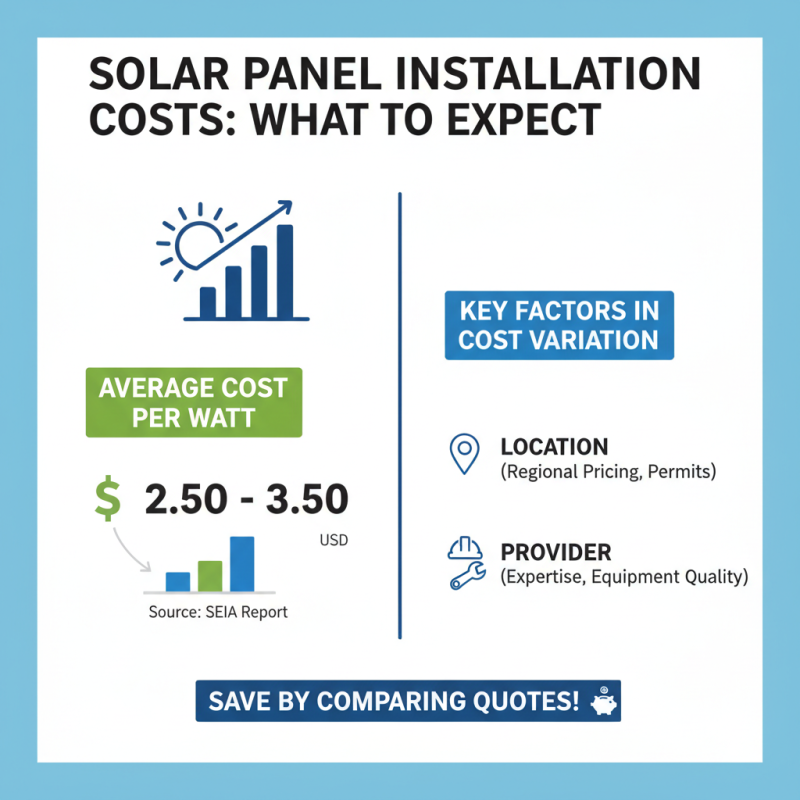
When considering solar panel installation, costs can vary widely across different providers and regions. A recent report from the Solar Energy Industries Association indicates that average installation costs can range from $2.50 to $3.50 per watt. This price range reveals a substantial difference depending on location and contractor expertise.
Comparing quotes from multiple installers is crucial. Some regions may have higher labor costs, affecting overall project pricing. Urban areas often report increased rates due to demand. Yet, rural installations can also encounter challenges like transportation costs. Therefore, it is essential to gather local quotes.
Tip: Always ask for multiple estimates. This will help uncover potential savings.
Another consideration is available incentives. Many states offer tax credits or rebates. Check if your state has programs that can reduce costs significantly.
Tip: Research local and federal incentives to maximize savings.
Remember, not all installers offer the same quality. A cheaper quote might mean hidden costs later on. Evaluating the long-term performance and warranties can prevent future headaches.