Get Solar Qualified With Our Smart Calculator!

GET ESTIMATE!

$0 Down, No Debt & No Payments for 12 Months, Power Up Smarter with New Solar Lease!

Top 10 Solar Panel Rebate Programs Worldwide?

Solar panel rebate programs are reshaping household energy decisions, but their real value depends on eligibility, timing, and local electricity prices. The International Energy Agency’s Renewables 2024 report expects global renewable capacity to expand by nearly 5,500 gigawatts between 2024 and 2030. Solar photovoltaic systems are expected to deliver about 80% of that growth. The scale is impressive. Yet a national trend does not guarantee a useful household rebate.

Energy economist and former IEA Executive Director Fatih Birol said, “Solar PV is now the cheapest source of electricity in history.” His observation explains why governments continue supporting solar adoption. Rebates can reduce upfront costs, shorten payback periods, and make rooftop systems more accessible. IRENA reported approximately 452 gigawatts of new solar capacity worldwide in 2024, showing how quickly the market is moving. However, program rules often differ sharply. Some offer direct cash payments. Others provide tax credits, performance incentives, or income-based support.

A rebate is not automatically a saving. Equipment prices, installer quality, grid charges, and application deadlines still matter. This guide examines the top 10 solar panel rebate programs worldwide, comparing their funding structures, eligibility requirements, and practical limitations. The comparison is useful, but not perfect. Policies change, and advertised benefits may overlook paperwork, waiting periods, or regional restrictions. Readers should verify current terms with official agencies before signing a contract.
Top 10 Solar Panel Rebate Programs Worldwide?

What Solar Panel Rebates Are and How They Work

Solar panel rebates reduce the upfront cost of installing a photovoltaic system. Unlike a loan, a rebate generally does not need repayment. The payment may come from a national agency, regional authority, utility, or local government.

The process usually begins with an eligibility check. Requirements may include property location, system size, approved equipment, installer credentials, and household income. Some programs offer money after installation. Others deduct the incentive from the initial invoice. Timing matters. A homeowner may need approval before ordering panels, not after the roof work begins.

Keep every document.

Applicants commonly submit invoices, equipment specifications, proof of payment, installation certificates, and photographs. An authority may also request a final inspection or evidence that the system connects safely to the grid. Missing one document can delay payment for weeks. That detail is easy to underestimate.

Rebates are not the same everywhere. Some cover only panels, while others include inverters, batteries, or structural upgrades. A tax credit reduces taxable income or tax owed, but a rebate usually lowers the purchase cost directly. The actual benefit depends on local rules, tax status, installation date, and available funding. Online summaries can become outdated quickly. Checking the official program page is safer than trusting an old calculator. Rules can feel inconsistent, and even careful applicants may misread them. A licensed installer can explain technical requirements, but the applicant remains responsible for confirming eligibility.

The Top 10 Solar Panel Rebate Programs by Region

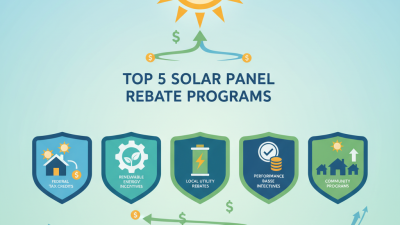
Top 10 Solar Panel Rebate Programs by Region

In North America, the United States offers a federal residential clean-energy tax credit, while Canadian support often comes through provincial rebates and low-interest financing. In Latin America, Brazil provides selected tax exemptions, and Chile supports residential systems through net-billing rules. These incentives may reduce installation costs, but eligibility can depend on property ownership, equipment certification, and local approval.

Asia-Pacific includes Australia’s Small-scale Renewable Energy Scheme, India’s PM Surya Ghar program, Japan’s municipal rooftop subsidies, and China’s city-level distributed solar incentives. Australia commonly reduces upfront prices through certificates rather than direct cash. India links support to registered installers and system capacity. Japan and China vary considerably by municipality. That regional gap is easy to underestimate.

In Europe, Germany’s photovoltaic tax relief, France’s renovation assistance for eligible solar technologies, and Portugal’s renewable-energy grants are widely watched programs. Africa has fewer nationwide rebates, although South Africa has used tax-based support and some municipalities have offered local incentives. Program names can sound generous. Actual savings may shrink after grid fees, permits, inspections, and battery costs. Policy details also change faster than many online guides admit. Checking the current government portal remains essential, even when an installer sounds confident.

Top 10 Solar Panel Rebate Programs Worldwide? - The Top 10 Solar Panel Rebate Programs by Region

A regional comparison of major public solar incentives and tax-supported programs. Incentive values may vary by installation date, household income, system size, location, and annual government budgets.

Rank Region Program or Incentive Support Mechanism Typical Maximum or Reference Value Main Eligibility Conditions Program Status Official Source
1 India PM Surya Ghar: Muft Bijli Yojana Central financial assistance for residential rooftop solar systems, paid through the national application process. ₹30,000 per kW for the first 2 kW, plus ₹18,000 for the next 1 kW; maximum central subsidy of ₹78,000 per household. Residential electricity consumers with a valid electricity connection; subsidy is generally limited to systems up to 3 kW for the standard maximum benefit. Active Government portal
2 Australia Small-scale Renewable Energy Scheme Eligible systems create Small-scale Technology Certificates, which reduce the upfront purchase or installation cost through an approved certificate market. The value depends on system capacity, postcode, installation year, and the certificate market price. Systems up to 100 kW may qualify. Eligible small-scale solar photovoltaic systems must meet technical, installer, product, and location requirements under the national scheme. Active to 2030 Clean Energy Regulator
3 United States Residential Clean Energy Credit Federal income-tax credit for qualifying residential clean-energy property, including solar electric systems and associated equipment. The credit was generally 30% of qualifying expenditure for eligible systems placed in service during the applicable federal credit period. The system must be installed at a qualifying residential property and meet federal tax-credit requirements. The taxpayer must have sufficient federal tax liability to use the credit. Verify current tax year U.S. Internal Revenue Service
4 Canada Nova Scotia SolarHomes Program Provincial rebate calculated according to the installed solar photovoltaic capacity. Up to C$3,000, commonly calculated at approximately C$0.30 per watt for qualifying residential installations. Eligible Nova Scotia homeowners must use approved equipment and contractors and satisfy program requirements relating to the property and installation. Active; budget dependent Efficiency Nova Scotia
5 France Self-consumption Solar Installation Premium A public premium is available for qualifying photovoltaic installations operating mainly for self-consumption, alongside regulated electricity export arrangements. The per-watt premium is revised periodically and depends on system capacity and the applicable tariff period; installations up to 100 kW are commonly covered. The installation must meet technical rules, grid-connection requirements, and self-consumption or surplus-export conditions. Approved installation standards may apply. Tariff updated periodically French public service
6 Italy Residential Photovoltaic Tax Deduction A tax deduction may cover part of qualifying renovation expenditure, including residential photovoltaic systems and, where permitted, battery storage. Up to 50% for qualifying principal-residence work under applicable tax rules, subject to expenditure limits and the rules in force for the relevant tax year. Applicants must incur eligible expenses, retain compliant invoices and payment records, and meet national tax and property requirements. Tax-year dependent Italian Revenue Agency
7 Austria EAG Photovoltaic Investment Support Competitive or first-come investment grants for new photovoltaic systems, with different funding categories based on system capacity. Recent funding rounds have used capacity-based rates, with higher support per kW for smaller systems and lower rates for larger capacity bands. Private households, businesses, and other eligible applicants must apply within the relevant funding round and satisfy technical and commissioning requirements. Annual funding rounds OeMAG
8 Sweden Green Technology Deduction for Solar Electricity A direct tax reduction at the point of invoice for qualifying green-technology installations, including residential solar electricity systems. The solar-electricity deduction is generally 15% of eligible labor and material costs, subject to an annual personal limit and tax conditions. The applicant must own or hold qualifying rights to the home, have sufficient tax liability, and use an eligible installation service. Active; tax conditions apply Swedish Tax Agency
9 South Korea Renewable Energy Home Support Program Government support offsets part of the installation cost for household renewable-energy facilities, including residential photovoltaic systems. The support percentage and household contribution vary by year, technology, system size, and the published government budget. Primarily available to residential properties that meet program, equipment, installer, inspection, and grid-connection requirements. Annual application cycle Renewable Energy Center
10 Japan Tokyo Residential Solar Installation Subsidy A metropolitan subsidy supports the installation of residential photovoltaic systems, with the amount determined by system capacity and equipment specifications. Subsidy rates and household caps are set by the Tokyo metropolitan annual program and may differ according to panel performance and installation conditions. Eligible homes in Tokyo must meet local application deadlines, technical standards, equipment requirements, and completion documentation rules. Annual metropolitan budget Tokyo Metropolitan Government

Eligibility Rules, Incentive Amounts, and Covered Technologies

Solar incentives vary sharply by country, household income, and system size. These ten leading programs show the main patterns. The United States offers a 30% federal tax credit for eligible residential and commercial solar installations. Homeowners usually need taxable income and documented installation costs. Battery storage may qualify when paired with a compliant system.

Australia uses small-scale technology certificates, which reduce the purchase price of eligible rooftop systems. The value depends on location, system capacity, and certificate prices. Canada has offered federal support for residential solar and batteries, but availability and deadlines require careful checking.

India’s national rooftop program provides fixed subsidies for approved residential systems, with higher support for smaller capacities. Germany mainly supports solar through low-interest financing and payment rules, rather than one universal rebate.

France combines regional assistance with self-consumption payments for qualifying installations. Japan often relies on local-government subsidies, which may cover panels, batteries, or both.

Italy has used tax deductions and renovation incentives, but changing eligibility rules make professional verification essential. The Netherlands applies favorable tax treatment to some residential solar purchases, while export compensation depends on current energy rules. China has supported distributed solar through provincial and municipal measures, creating uneven access.

Covered technologies differ. Most programs accept certified photovoltaic modules, inverters, and installation work. Some exclude ground-mounted systems, leased equipment, or oversized arrays. Applications may require permits, energy certificates, income records, and grid approval. Rules are not always tidy. Incentive amounts can change before installation, and advertised savings may ignore taxes, maintenance, or battery replacement. A written eligibility check is safer than relying on a sales estimate.

How to Apply for a Solar Panel Rebate Step by Step

Solar rebate rules differ widely, but the application process usually follows a familiar path. Start by checking the official energy department or municipal website in your area. Confirm property eligibility, income limits, system size rules, and application deadlines. Some programs require approval before installation. Others accept claims after the work is complete.

Collect clear documents early. You may need proof of address, recent utility bills, equipment specifications, installer credentials, permits, and signed invoices. Ask the installer for model numbers and expected annual output. Compare these details with the program’s published requirements. Do not rely only on verbal promises. Save webpages and email confirmations as PDF files.

Submit the application through the approved online portal or government office. Check every number before sending it. A small mismatch in the address or invoice can delay payment. Keep the application reference number and inspection records. If an inspection is required, ensure the panels, wiring, and meter are accessible. After approval, monitor the payment status and respond quickly to requests for clarification. Rules can change during a project, even after careful planning. My checklist is useful, not perfect. Contact the relevant authority when instructions conflict, and never assume a rebate is guaranteed until written approval arrives.

Key Factors for Comparing Global Solar Incentive Programs

Top 10 Solar Panel Rebate Programs Worldwide

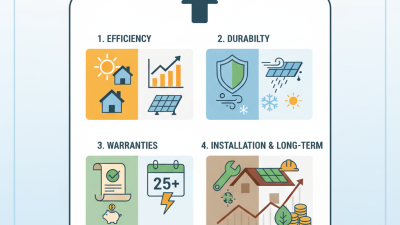
Comparing solar incentives requires more than listing the largest rebates. A useful review should measure payment value, eligibility, processing time, and real installation costs. The International Renewable Energy Agency reported about 346 gigawatts of new solar capacity in 2023. Yet strong deployment does not always mean generous household support. Some programs reduce upfront prices, while others depend on tax liability, income, or approved installers.

Timing matters. A 30% tax-based incentive may look attractive, but households often wait months for reimbursement. Direct rebates can reduce the invoice immediately. Compare the maximum amount, income thresholds, application deadlines, and whether batteries qualify. Grid export rules also change the financial result. The International Energy Agency notes that distributed solar increasingly affects electricity networks, making self-consumption rules more important. Small details matter.

Reliability needs attention. Check whether funding is legally committed or only announced. Review official budgets, annual application volumes, and historical payment delays. The World Bank highlights that affordability and access remain uneven across countries, so headline percentages can mislead. I would also compare labor requirements, permit fees, equipment standards, and property ownership rules. Not every “top” program is practical. A rebate with complex paperwork may underperform a smaller, faster payment. This is where rankings become imperfect, and deeper local research is still necessary.

Scroll to Top