How to Calculate Solar Panels for Home Cost Effectively?
When considering solar panels for home cost, it's essential to understand the financial aspects involved. According to Dr. Emily Foster, a leading expert in renewable energy solutions, "Investing in solar panels is a decision that requires both research and calculation." Her insight emphasizes the importance of accurate assessment.
Calculating the cost-effectiveness of solar panels involves various factors. Initial installation costs, government incentives, and long-term savings should all be considered. Homeowners often overlook hidden expenses, such as maintenance or potential upgrades. This oversight can skew expected savings.
Understanding solar panels for home cost can empower homeowners. By analyzing energy consumption, local solar incentives, and financing options, individuals can make informed decisions. Yet, it's crucial to approach these calculations cautiously. Each home's situation is unique, which adds complexity to the equation. Balancing immediate costs against future savings requires mindful consideration.

Understanding Your Home's Energy Needs for Solar Panel Calculation
Understanding your home's energy needs is crucial when calculating solar panel requirements. The first step is to analyze your electricity consumption. A typical home in the U.S. uses about 877 kWh per month. However, this number varies based on location, season, and lifestyle. For instance, families in warmer climates often use more energy for air conditioning.
Next, assess the wattage of potential solar panels. Most residential panels generate between 250 to 400 watts each. To determine how many panels you need, divide your monthly usage by the expected output per panel. An average panel can produce around 1,200 kWh annually. This means that, to meet a monthly demand of 877 kWh, you might need around 7 to 10 solar panels under optimal conditions.
It’s important to consider other factors too. Roof orientation, shading, and local weather can impact energy production. Reports suggest that panels facing south perform best. Yet, homes with limited sun exposure may still benefit from solar through incentives or community solar programs. Evaluating these elements can lead to a more accurate solar panel estimation.
How to Calculate Solar Panels for Home Cost Effectively?
| Energy Needs (kWh/month) |
Number of Solar Panels |
Cost of Solar System ($) |
Savings per Month ($) |
Payback Period (Years) |
| 500 |
10 |
15,000 |
75 |
5 |
| 800 |
15 |
22,500 |
120 |
6 |
| 1000 |
20 |
30,000 |
150 |
6 |
| 1200 |
24 |
36,000 |
180 |
6.5 |
Exploring Available Solar Panel Types and Their Cost Implications
When exploring solar panel types, understanding their cost implications is essential. Solar panels generally fall into three main categories: monocrystalline, polycrystalline, and thin-film. Monocrystalline panels are known for their high efficiency and durability, but they tend to be pricier. Polycrystalline panels are a more budget-friendly option, suitable for homeowners who seek value. Thin-film panels are lightweight and flexible but may require more space and offer lower efficiency.
Tip: If you have limited roof space, consider investing in monocrystalline panels for maximum energy output. These panels, while costly upfront, can lead to savings in the long run due to their efficiency. Analyze your energy needs carefully before making a decision.
Another important factor is installation costs. Quality installation can vary significantly. While opting for a cheaper installer might seem tempting, think about potential long-term problems. Poorly installed panels can lead to inefficiency and costly repairs. Research local solar installers, read reviews, and request detailed quotes.
Tip: Ask about warranty options. A reliable installer often provides robust warranties covering both equipment and labor. This is a sign of their commitment to quality workmanship. Balancing initial costs with potential long-term benefits will lead to a more informed investment.
Calculating Installation Costs: Labor, Materials, and Equipment
Calculating the installation costs of solar panels involves several components. Labor costs can vary significantly based on your location. Skilled technicians are essential for proper installation. Hiring experts ensures safety and efficiency. Expect labor costs to account for a substantial part of your budget, often ranging between $0.50 to $1.50 per watt.
Materials also impact the overall cost. High-quality solar panels are vital but can be expensive. Additionally, inverter and mounting equipment make up the total expense. It's crucial to weigh the quality against the price. Sometimes, cheaper materials lead to more significant issues down the road. You save upfront but might pay in repairs later.
Equipment costs are not just about panels. You’ll need wiring and other accessories. Consider potential maintenance costs too. Installing a solar system can be tricky, especially for beginners. Overlooking details can derail an otherwise solid investment. Awareness of these factors is essential to achieve cost-effectiveness.
Estimated Solar Panel Installation Costs Breakdown
This chart represents the estimated costs involved in installing solar panels for a typical home. The costs are divided into three main categories: Labor, Materials, and Equipment.
Evaluating Government Incentives and Financing Options for Solar Panels
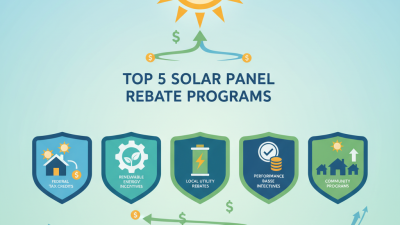
When considering solar panels for your home, government incentives can significantly influence costs. Many states offer tax credits. For example, the Federal Investment Tax Credit (ITC) allows homeowners to deduct 26% of solar installation costs from their federal taxes. This can lead to substantial savings. In 2020, the average cost of a solar panel system ranged from $15,000 to $25,000. With incentives, the effective cost can drop significantly.
Financing options also play a crucial role. Solar loans are available through various financial institutions. These loans often have lower interest rates than traditional loans. A study by the Solar Energy Industries Association showed that over 70% of solar customers opt to finance their systems rather than pay upfront. Additionally, power purchase agreements (PPAs) enable homeowners to pay for the energy produced by the solar system instead of purchasing the system outright—feasible for those who may lack upfront cash.
Yet, some challenges remain. Not all incentives are permanent. State programs may vary. Benefits could diminish over time, making early adoption more advantageous. Understanding local regulations and available incentives requires research. Prospective buyers should assess these factors carefully before committing to solar energy investments.
Estimating Long-Term Savings: Return on Investment and Payback Period
When estimating long-term savings from solar panels, understanding the return on investment (ROI) is crucial. ROI gives homeowners a clear picture of how efficiently their investment will pay off over time. A typical solar system can last between 25 to 30 years. The energy savings during this period contribute to the overall ROI. Homeowners often underestimate these savings, sometimes thinking they will be less impactful.
Calculating the payback period is equally important. This period reflects how long it takes to recoup the initial investment through energy savings. Many homeowners find their payback period ranges from 5 to 10 years. Factors such as local electricity rates, sunlight exposure, and installation costs greatly influence this timeframe. It’s easy to overlook these elements when making a decision.
Reflecting on these calculations helps homeowners make informed choices. Engaging with solar energy experts can offer deeper insights. They provide information tailored to unique situations. Understanding potential obstacles, like unexpected costs, is essential. It’s not simply about the initial investment; it’s about the journey of ownership and savings over time.